ANALYSIS The Citizen Tuesday, 04 April 2006
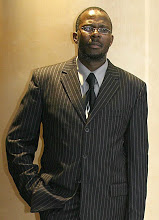
ByNKONZWENHlEMQADI
WILL the black business or middle class grow, and have a positive effect on the growth and transformation of the national economy? Is the black business or middle class aligned to the country's transformation mandate?
These are the most frequently asked questions, and the groundswell of disillusionment is brewing among the African masses, as people make this concern our national discourse.
The South African emerging black or middle class and its social responsiveness has left the wider civil society questioning whether or not the black elite's new-found purchasing power is really fuelling a broader consumer boom.
Some observers argue these nouveau-riche or elites, located in the most affluent surburbs, lack the class consciousness to create sustainable investment and empower their communities.
Eminent scholars such as Kwa-Zulu-Natal Premier Sbusiso Ndebele go out of their way to challenge and address the social conscience of the province's more affluent citizens.
"Where are the black business and intelligentsia located in the South African economy, and are they contributing to the much-vaunted S% economic growth and the development of our own communities?", has become Ndebele's daily mantra.
This new phenomenon whereby more and more upwardly mobile black people are getting richer while the majority of their compatriots get left behind is considered as one of the outstanding characteristics of the political, social and economic transformation of the post-1994 era.
And this begs the central question: how do we use this new black economic power to fast-track the gap between the so-called first and second economies.
Figures from a South African Advertising & Research Foundation survey released last year provided a clear picture of the strong growth in the number of blacks in the top LSM (Living Standard Measure) indicating that black people were taking huge strides into the higher categories, wealth-wise.
However, Empowerdex CEO Vuyo Jack criticises the new black buying power because, he argues, it is being spent on consumerism rather than investments.
People are doing what they were previously unable to do -such as going on holidays or buying a nice brand-new car.
"Without a focus on investments the massive spending boom may not be sustainable.
"The real middle class are those with income enabling them to build assets, and this income should also be used to support their extended families," according to Jack.
On the other hand, world-renowned Nigerian-born writer Chika Onyeani has warned the South African black middle class that once they do go into the business arena they should take cognisance of the insidious "spider web" of economic dependence.
Onyeani sounds a warning about the dangers of economic dependency, that could simply perpetuate the formerly one-sided power relations between haves and have-nots, a decade after the advent of democracy
Onyeani sees our BEE (Black Economic Empowerment) deals as a good policy that gives Africans first-hand insight into how multinationals listed on the Johannesburg Stock Exchange operate.
However, he urges the black middle class to encourage the growth of a manufacturing class -either by providing access to reasonably-priced money or by buying goods and services that have been produced by their own people.
Merrill Lynch economist Nazmeera Moola concurs. He states that "generally, there has been an increase in purchasing power, mostly in the sales of consumer goods, financial services, motor cars and tourism".
Moola, though, adds that it is difficult to pinpoint what does constitute the "black middle class".
Interestingly, an ideological debate about the black middle class in the global economy is proving quite contentious.
Strong arguments are that surely it was a good thing that the aspirant black business or middle class had come out of the so-called second economy and have overcome the hardships that the majority of African people are still confronted with.
A pertinent question is whether this so-called class of elites is socially responsible - whether they will empower their close relatives and friends still trapped in the second economy.
What measures have they put in place, working in partnership with the three tiers of governance, to help their communities gain access to basic services?
And is the black business or middle class able to reconcile the huge disparities so prevalent among South African communities' living standards?
Former Black Management Forum MD Jerry Vilakazi argues that it is high time for the black business or middle class to forget about investing in golf estates
found in the affluent suburbs. They need to start investing back into their communities - those still residing in the townships and rural areas, as he warned during the BMF conference last year.
Our black business or middle class faces a critical, fundamental challenge. It is their responsibility, their social imperative, to reverse capital flow back into the townships and rural areas.
Grassroots communities have been asking whether the black middle class is using its position and influence to advance the transformation objectives of our democracy.
Seen within the context of revisionist sociology, or in the Marxist idiom, the South African black business or middle class lacks the class consciousness and characteristics to become a fully-fledged class in itself.
The pragmatic understanding of the black business or middle class needs to be built on more than just generating income and immediate profit. It should, instead, start building wealth via as-, set classes such as property, manufacturing and securities.
Our black business or middle class has a social duty, the masses argue, to help inculcate entrepreneurial skills to the huge numbers of our unemployed school graduates. And they should also be able to inculcate middle class status to the younger generation.
Simply put, through people development and education programmes our emerging black business or middle class occupying strategic positions should form, shape and influence government policies towards the total economic liberation of the African people. •
This assumes a black middle class exists. Surprisingly, renowned black businessman Stanlib chairman Saki Macozoma denies the existence of this class: stating the social category we call the black middle class in South Africa is a conceptual construct rather than an objective reallty.
"A black bourgeoisie in South Africa", according to Macozoma, "is pure fiction".
□ Mqadi is a Durban-based writer
Friday, July 31, 2009

BUSINESS PLEDGE SIGNED BY DURBAN WOMEN
The City of Durban launched a Women Empowerment Programme to raise the profile of women in business to highlight the needs and challenges faced by members of the "fairer sex" in their business operations, said eThekwini Municipality Mayor in Durban today.
This undertaking was contained in the message of support from Mayor Obed Mlaba that was read during the two-day 'eThekwini Women in Business' conference held at the Inkosi Albert Luthuli International Convention Centre.
"I implore all the participants to explore all avenues that will fast-track and enhance the opportunities of more and more women to run sound and profitable business enterprises.
We are fully cognisant of the important role women were playing in the SMMEs within the city's bustling economy, hence, we support their growth and sustainability.
We are confident this Women in Business symposium will serve as an excellent platform to profile women in business, create opportunities, provide information on business support, networking, finance and sharing of experiences to aspire and celebrate women success" said Mlaba.
He also called upon eThekwini women to use their business acumen and skills to contribute to the 'Durban Host City' status for the succesful hosting of the FIFA 2010 World Cup soccer finals.
eThekwini Municipality's Head of Business Support and Markets Unit Phillip Sithole said their cluster was fully supportive of women empowerment and gender equity programmes. He also committed, himself, to make every effort to ensure women participation in economic developmental initiatives was achieved within the city of Durban and throughout the municipality.
"This year we're taking the Women in Business programme into another level as we've formed partnership with the corporate sector, and have been joined by ABSA, Productivity SA, SAIBL and Deloite.
In hosting the Women in Business conference on the eve of the Women's Month (August), we aim to celebrate, recognise and empower the heroines who are making it in business despite the challenges posed by the global economic meltdown.
Qhamani Makhosikazi, we honour you, therefore, we inspire you to succeed in your enterprises as we, eThekwini Municipality, celebrate the success of women" noted Sithole.
A Declaration by eThekwini Women in Business was unveiled, and it reads;
"I hereby declare, as a Woman in Business, that I would succeed in all my business ventures and create for myself and others using my experience and skills to reach out to my fellow sisters and aid them to evolve into their true potential through mutual respect, kindness and understanding.
I hereby pledge to continously apply the Spirit of Ubuntu in business".
This undertaking was contained in the message of support from Mayor Obed Mlaba that was read during the two-day 'eThekwini Women in Business' conference held at the Inkosi Albert Luthuli International Convention Centre.
"I implore all the participants to explore all avenues that will fast-track and enhance the opportunities of more and more women to run sound and profitable business enterprises.
We are fully cognisant of the important role women were playing in the SMMEs within the city's bustling economy, hence, we support their growth and sustainability.
We are confident this Women in Business symposium will serve as an excellent platform to profile women in business, create opportunities, provide information on business support, networking, finance and sharing of experiences to aspire and celebrate women success" said Mlaba.
He also called upon eThekwini women to use their business acumen and skills to contribute to the 'Durban Host City' status for the succesful hosting of the FIFA 2010 World Cup soccer finals.
eThekwini Municipality's Head of Business Support and Markets Unit Phillip Sithole said their cluster was fully supportive of women empowerment and gender equity programmes. He also committed, himself, to make every effort to ensure women participation in economic developmental initiatives was achieved within the city of Durban and throughout the municipality.
"This year we're taking the Women in Business programme into another level as we've formed partnership with the corporate sector, and have been joined by ABSA, Productivity SA, SAIBL and Deloite.
In hosting the Women in Business conference on the eve of the Women's Month (August), we aim to celebrate, recognise and empower the heroines who are making it in business despite the challenges posed by the global economic meltdown.
Qhamani Makhosikazi, we honour you, therefore, we inspire you to succeed in your enterprises as we, eThekwini Municipality, celebrate the success of women" noted Sithole.
A Declaration by eThekwini Women in Business was unveiled, and it reads;
"I hereby declare, as a Woman in Business, that I would succeed in all my business ventures and create for myself and others using my experience and skills to reach out to my fellow sisters and aid them to evolve into their true potential through mutual respect, kindness and understanding.
I hereby pledge to continously apply the Spirit of Ubuntu in business".
Wednesday, July 29, 2009
DURBAN-DUBAI DAILY FLIGHTS
Emirates Airlines Senior Vice-President Nigel Page has conceeded that the Dubai-based flight airline giant could not wait any longer than capitalising to the ample business opportunities that were offered by the Durban's existing status as the busiest port in Africa.
He inimated that they had signed a Memorandum of Understanding to flight direct to the La Mercy (King Shaka0 International Airport when it opens early in 2010 but after a careful analysis and re-evaluation of business opportunities, they had 'for a competitive edge' decided to have their 278-seater Airbus flying to Durban International Airport at the beginning of October 2009.
These sentiments were echoed in Durban when the historic direct major international air route agreement was announced at the Inkosi Albert Luthuli International Convention Centre on Monday (27 July 2009).
The launch of the daily flights between Dubai and Durban was a cherry on top to the pledge that was made by the former KwaZulu-Natal Premier Sibusiso Ndebele during the 2007 Tourism Indaba that, he said, 'our intended launch in due course of the direct flights with Emirates Airlines will serve as a major boast to KZN's economic development and tourism industry as we make our province the Africa's premier tourist destination and gateway to the international world'.
The Durban-Dubai direct international carrier daily operations deal was signed by the incumbent KZN Premier Zweli Mkhize and the Emirates Airways Senior Vice-President Nigel Page, with the Tourism KZN CEO Ndabo Khoza being a co-signatory.
"The signing of the Durban-Dubai daily flights agreement is a major landmark for our region as the Kingdom of the Zulu will now have our own gateway to international destinations.
With the opening of King Shaka (La Mercy) International Airport early next year, this international direct route will position our province as Africa's leading tourism destination and will make inbound and outbound international travel easier and cost-effective' said Khoza.
Premier Mkhize noted the significance of the KZN launch during the current global economic meltdown.
"In the face of the economic downturn, we want to maximise and enhance Durban's position as a trading hub.
With this daily service to Dubai we are capitalising on the KZN's attractiveness to the world as official figures have indicated an annual 20% growth.
Emirates Airlines have direct flights to Angola three times a week, and the Durban-Dubai direct flights on a daily basis is both historic and significant as it sets a positive outlook for Durban, KwaZulu-Natal and South Africa at large.
We're very excited over this partnership with the globally-renowned 'sought after' tourism attractive Dubai" observed Mkhize.
Meanwhile, a week ago had seen Tourism Minister Marthinus van Schalkwyk releasing the 2008 official visitor figures which had showed that KZN still tops in South Africa's domestic tourism.
"Despite the tough economic condition, the tourism industry has remained relatively bouyant.
And KwaZulu-Natal is one of the major beneficiaries of domestic tourism and remains the top domestic destination in our country" said van Schalkwyk.
He inimated that they had signed a Memorandum of Understanding to flight direct to the La Mercy (King Shaka0 International Airport when it opens early in 2010 but after a careful analysis and re-evaluation of business opportunities, they had 'for a competitive edge' decided to have their 278-seater Airbus flying to Durban International Airport at the beginning of October 2009.
These sentiments were echoed in Durban when the historic direct major international air route agreement was announced at the Inkosi Albert Luthuli International Convention Centre on Monday (27 July 2009).
The launch of the daily flights between Dubai and Durban was a cherry on top to the pledge that was made by the former KwaZulu-Natal Premier Sibusiso Ndebele during the 2007 Tourism Indaba that, he said, 'our intended launch in due course of the direct flights with Emirates Airlines will serve as a major boast to KZN's economic development and tourism industry as we make our province the Africa's premier tourist destination and gateway to the international world'.
The Durban-Dubai direct international carrier daily operations deal was signed by the incumbent KZN Premier Zweli Mkhize and the Emirates Airways Senior Vice-President Nigel Page, with the Tourism KZN CEO Ndabo Khoza being a co-signatory.
"The signing of the Durban-Dubai daily flights agreement is a major landmark for our region as the Kingdom of the Zulu will now have our own gateway to international destinations.
With the opening of King Shaka (La Mercy) International Airport early next year, this international direct route will position our province as Africa's leading tourism destination and will make inbound and outbound international travel easier and cost-effective' said Khoza.
Premier Mkhize noted the significance of the KZN launch during the current global economic meltdown.
"In the face of the economic downturn, we want to maximise and enhance Durban's position as a trading hub.
With this daily service to Dubai we are capitalising on the KZN's attractiveness to the world as official figures have indicated an annual 20% growth.
Emirates Airlines have direct flights to Angola three times a week, and the Durban-Dubai direct flights on a daily basis is both historic and significant as it sets a positive outlook for Durban, KwaZulu-Natal and South Africa at large.
We're very excited over this partnership with the globally-renowned 'sought after' tourism attractive Dubai" observed Mkhize.
Meanwhile, a week ago had seen Tourism Minister Marthinus van Schalkwyk releasing the 2008 official visitor figures which had showed that KZN still tops in South Africa's domestic tourism.
"Despite the tough economic condition, the tourism industry has remained relatively bouyant.
And KwaZulu-Natal is one of the major beneficiaries of domestic tourism and remains the top domestic destination in our country" said van Schalkwyk.
Tuesday, July 28, 2009
VAVI & ZILLE SING ON SAME HYMN BOOK
They may seem as strange bed-fellows but both the Cosatu Secretary-General and the Democratic Alliance leader have come out in unison to strongly condemn the extravagant, exorbitant and irresponsible spending on new-flashy motor vehicles by the newly-elected South African government ministers of late.
Zwelinzima Vavi has described the rule in the Minister's Handbook which allows ministers to purchase cars up to 70% of their annual salaries as "immoral and wrong".
On the same vein, Helen Zille has pledged unstinting and overwhelming support to the open letter written by the DA's Member of Parliament Anchen Dreger and addressed to the Director-General in the Presidency Vusi Mavimbela whereby he's demanding that certain anmendments were made to the minister's handbook.
"We can not, in the midst of the current economic crisis, allow theduly-elected public representatives to spend government resources harphazardly.
The DA is proposing a wide range of cost-cutting measures for the executive, including doing away with free trips on the luxurious Blue Train, removing the right to the state-sponsored domestic work and also calls for the reasonable state-car allowance to a meagre R660 000,00" says Zille.
Speaking in Cape Town over the weekend, Zille, stressed that economic times were tough and called members of the executive, like everyone else, should tighten their belts and demonstrate some frugality.
And the SA's umbrella labour federation boss could not hide their displeasure at what the government ministers were seen to be doing at the time when ordinary workers, in particular, the textile manufacuring sector was shedding thousands of employment employment opportunities and the almost the entire local government tier was brought at a standstill this week as employees demand a 15% pay rise.
"Cosatu won't be able to convince workers that the Cde JZ administration was still new in governance when they see expensive cars worth millions being bought by the ministers, while their own grievances remainunattended" noted Vavi.
A Sunday major newspaper has reported what can be construe as condonation of minister's spending when it commended Finance Minister Pravin Gordhan for being modest on the two official cars he has been allowed to purchase.
The Sunday Times reported that Gordhan's Lexus GS 300 SE for Gauteng and Audi A6 for Cape Town cost a combined R 1191 612,66.
The newspaper said this figure 'was less than half of the extravagant R2,4 million Communications Minister Siphiwe Nyanda spent on his two BMW's, plus the close to R150 000 worth of extras.
However, genteel murmurs have emerged from the broader liberation movement activists who argue that as a senior Tripartite Alliance leader Vavi should have utilised the 'local, internal remedies' and voiced his serious reservations at branch level ratheer thaan rush to the media networks with the likes of opposition politics.
Zwelinzima Vavi has described the rule in the Minister's Handbook which allows ministers to purchase cars up to 70% of their annual salaries as "immoral and wrong".
On the same vein, Helen Zille has pledged unstinting and overwhelming support to the open letter written by the DA's Member of Parliament Anchen Dreger and addressed to the Director-General in the Presidency Vusi Mavimbela whereby he's demanding that certain anmendments were made to the minister's handbook.
"We can not, in the midst of the current economic crisis, allow theduly-elected public representatives to spend government resources harphazardly.
The DA is proposing a wide range of cost-cutting measures for the executive, including doing away with free trips on the luxurious Blue Train, removing the right to the state-sponsored domestic work and also calls for the reasonable state-car allowance to a meagre R660 000,00" says Zille.
Speaking in Cape Town over the weekend, Zille, stressed that economic times were tough and called members of the executive, like everyone else, should tighten their belts and demonstrate some frugality.
And the SA's umbrella labour federation boss could not hide their displeasure at what the government ministers were seen to be doing at the time when ordinary workers, in particular, the textile manufacuring sector was shedding thousands of employment employment opportunities and the almost the entire local government tier was brought at a standstill this week as employees demand a 15% pay rise.
"Cosatu won't be able to convince workers that the Cde JZ administration was still new in governance when they see expensive cars worth millions being bought by the ministers, while their own grievances remainunattended" noted Vavi.
A Sunday major newspaper has reported what can be construe as condonation of minister's spending when it commended Finance Minister Pravin Gordhan for being modest on the two official cars he has been allowed to purchase.
The Sunday Times reported that Gordhan's Lexus GS 300 SE for Gauteng and Audi A6 for Cape Town cost a combined R 1191 612,66.
The newspaper said this figure 'was less than half of the extravagant R2,4 million Communications Minister Siphiwe Nyanda spent on his two BMW's, plus the close to R150 000 worth of extras.
However, genteel murmurs have emerged from the broader liberation movement activists who argue that as a senior Tripartite Alliance leader Vavi should have utilised the 'local, internal remedies' and voiced his serious reservations at branch level ratheer thaan rush to the media networks with the likes of opposition politics.
Friday, July 24, 2009
WIDEN ACCESS TO HIGHER EDUCATION:NZIMANDE
Higher Education Minister Bonginkosi 'Blade' Nzimande has reiterated his agenda to establish free education for the poorest of the poor and also implored South African citizens that the peoples' centred government carries a moral duty to support the youth's need to succeed in their chosen academic careers.
Nzimande delivered the seminal paper on 'education transformation' at Wits Business School on Thursday (July 23, 2009) whereby he called for the higher education institutions' need to be inclusive of a broader range of South Africans.
"Education transformation is .... about advancing a developmental agenda to benefit the overwhelming majority of our citizens.
The reality in South Africa, added Nzimande, was that most people were poor and black, and did not have access to adequate schooling.
And this democratic government .... cannot be expected to pander to the class and racial prejudices of the priviledged, whether they are white or members of the black elite.
"What is wrong when we propose ideas that provide free education up to an undergraduate level,why does this provoke some 'irrational fear' to some sections of the South African population?
Does this mean that the government would allegedly 'drop standards by swampling the universities with the poor and the unwashed? " questioned Nzimande.
The attainment of free undergraduate education for all poor youth will no doubt be a process, he assured the audience, and will not be implemented without due consultation engagement will all our stakeholders.
'Widening access to higher education was as important as ensuring students wer succesful in their studies.
This peoples' centred govrnmnt must ensure that we provide them with the support that they need to succeed as long as they are prepared to put in the necessary effort" concluded Nzimande.
Meanwhile, the newly-appointed and the first Black Rector ever at the Univesity of Free State Professor Jonathan Jansen graviates at witnessing the prospect of forging national unity thast was exhibited by students across colour on his first week as the Vice Chancellor there.
"On my first week at UFS and evrything I heard about the place would scare the epidermis of a black man stranded at night in the midst of this campus.
However, what I saw at the Huis Abraham Fischer (Residence) was something completely unexpected .... a group of white boys and black boys singing together in Afrikaans some of the most beautiful songs I have ever heard.
They were clearly good friends, a team enjoying each other's company, hernce, am calling South African youth to start embracing each other and begin to sing from a new hymn book" observed Jansen.
The Univrsity of Free State was recently in the news for all the bad publicity aftr some white students (rascals) were captured on video urinating in food and beer which they had forced on the varsity maids to eat and drink, whereon the maids had vomited over this concotion.
Nzimande delivered the seminal paper on 'education transformation' at Wits Business School on Thursday (July 23, 2009) whereby he called for the higher education institutions' need to be inclusive of a broader range of South Africans.
"Education transformation is .... about advancing a developmental agenda to benefit the overwhelming majority of our citizens.
We have to find alternative means to bring young people with potential into the higher education system. My suggestion that we review matric' endorsement as the only entry point into university entry was miscontrued in various sectors as aimed in decimating academic standards, and this is far wide from the truth.
Surely to some, opening opportunities to the previously underpriviledged youth may appear that 'barbarians are at the gate, clamouring to get in and destroy their gentle lifestyle and their high standards', and if that is what they think, then it is too bad" cautions Nzimande.The reality in South Africa, added Nzimande, was that most people were poor and black, and did not have access to adequate schooling.
And this democratic government .... cannot be expected to pander to the class and racial prejudices of the priviledged, whether they are white or members of the black elite.
"What is wrong when we propose ideas that provide free education up to an undergraduate level,why does this provoke some 'irrational fear' to some sections of the South African population?
Does this mean that the government would allegedly 'drop standards by swampling the universities with the poor and the unwashed? " questioned Nzimande.
The attainment of free undergraduate education for all poor youth will no doubt be a process, he assured the audience, and will not be implemented without due consultation engagement will all our stakeholders.
'Widening access to higher education was as important as ensuring students wer succesful in their studies.
This peoples' centred govrnmnt must ensure that we provide them with the support that they need to succeed as long as they are prepared to put in the necessary effort" concluded Nzimande.
Meanwhile, the newly-appointed and the first Black Rector ever at the Univesity of Free State Professor Jonathan Jansen graviates at witnessing the prospect of forging national unity thast was exhibited by students across colour on his first week as the Vice Chancellor there.
"On my first week at UFS and evrything I heard about the place would scare the epidermis of a black man stranded at night in the midst of this campus.
However, what I saw at the Huis Abraham Fischer (Residence) was something completely unexpected .... a group of white boys and black boys singing together in Afrikaans some of the most beautiful songs I have ever heard.
They were clearly good friends, a team enjoying each other's company, hernce, am calling South African youth to start embracing each other and begin to sing from a new hymn book" observed Jansen.
The Univrsity of Free State was recently in the news for all the bad publicity aftr some white students (rascals) were captured on video urinating in food and beer which they had forced on the varsity maids to eat and drink, whereon the maids had vomited over this concotion.
Tuesday, July 21, 2009
TITO MBOWENI FAILED US:DECRY ECONOMISTS
Replacing Reserve Bank Governor Tito Mboweni with the ABSA Chairwoman Gill Marcus has been hailed by various sectors in South Africa, with the most notably delight coming from his former university mate in exile.
The renowned Durban-based businessman,who a Professor of Economics and a Bachelor of Laws graduate Bonke Dumisa has come out smoking and dismissed Mboweni's 10-year tenure in the central bank as dissappointing because 'Mboweni had failed to transform it in line with the democratic government's constitutional agenda.
"Tito Mboweni had become 'too high' for his own good. Mboweni was a politician-turned-bureaucrat who enjoys the status of being perceived as a 'different black'. Mboweni did not enjoy seeing other blacks climbing the hierarchial ladder in their chosen fields.
In most countries, the Reserve Bank is used by young graduates as a training ground and stepping stone to other jobs in both the private sector and the public sector, but Mboweni could hear none of that" observes Dumisa
While the largest umbrella labour federation COSATU had described Mboweni's aloofness to review the inflation targeting policy after persistent calls, Dumisa have traced Mboweni's pompousness back to their college days at Roma University during the worst days of apartheid in South Africa.
Cosatu spokesperson Patrick Craven had called Mboweni's firing last Sunday by the country's President Jacob Zuma as "good riddance as he was inimical to the country's high unemployment rate, inequalities and interest rates that were having an adverse effect to the working class".
However the serious indictment of him, adds Dumisa, is that after having conceived, drafted and gave political direction to the present day legislation, especially in the labour field, as the first democratically-elected Minister of Finance, Mboweni has failed the previously disadvantaged p
eople.
"We expected Mboweni to be in the forefront of championing the identification, growing, nurturing, and deployment of many future economists and banking executives to make sure our economy and the banking industry are in good hands.
Throughout South Africa, no single economist or bank executive can proudly proclaim that 'today I am a success story because of the motivation and mentoring of Tito Mboweni' " asserts Dumisa.
Apparently, both Mboweni and Dumisa had spent several years during the apartheid era studying at the National University of Lesotho, affectionaely known as 'Roma University' in the 1970's.
Dumisa highlighted that Mboweni was,then, regaling himself as a hardcore communists that eloquently qouted 'Lenin and the dialectical materialism theories', and according to Dumisa, he had dismissed him as an'elementary capitalist simply because he was studying a pure bachelor of commerce'.
Dumisa sums up his seminal critique of Mboweni's leadership as South Africa's central banker over a decade by noting that'Tito Mboweni did not fail, in fact, he was not interested in championing any meaningful transformation at the Reserve Bank'.
Even the Political Science Masters graduate in African political economy Bongani Ngqulunga, now working in the Presidency,Union Buildings, Pretoria, was timid to comment on Mboweni's change of fortunes.
The erstwhile University of Durban-Westville SRC Secretary when Mboweni was appointed as the Reserve Bank Governor, Ngqulunga was instrumental in organising the 'TITO MBOWENI CELEBRATORY BANQUET AS RSA RESERVE BANK GOVERNOR' at the Durban's International Convention Centre.
However, these days he conceeded that the replacement of Mboweni can be construed as a 'project gone wrong'.
The renowned Durban-based businessman,who a Professor of Economics and a Bachelor of Laws graduate Bonke Dumisa has come out smoking and dismissed Mboweni's 10-year tenure in the central bank as dissappointing because 'Mboweni had failed to transform it in line with the democratic government's constitutional agenda.
"Tito Mboweni had become 'too high' for his own good. Mboweni was a politician-turned-bureaucrat who enjoys the status of being perceived as a 'different black'. Mboweni did not enjoy seeing other blacks climbing the hierarchial ladder in their chosen fields.
In most countries, the Reserve Bank is used by young graduates as a training ground and stepping stone to other jobs in both the private sector and the public sector, but Mboweni could hear none of that" observes Dumisa
While the largest umbrella labour federation COSATU had described Mboweni's aloofness to review the inflation targeting policy after persistent calls, Dumisa have traced Mboweni's pompousness back to their college days at Roma University during the worst days of apartheid in South Africa.
Cosatu spokesperson Patrick Craven had called Mboweni's firing last Sunday by the country's President Jacob Zuma as "good riddance as he was inimical to the country's high unemployment rate, inequalities and interest rates that were having an adverse effect to the working class".
However the serious indictment of him, adds Dumisa, is that after having conceived, drafted and gave political direction to the present day legislation, especially in the labour field, as the first democratically-elected Minister of Finance, Mboweni has failed the previously disadvantaged p
eople.
"We expected Mboweni to be in the forefront of championing the identification, growing, nurturing, and deployment of many future economists and banking executives to make sure our economy and the banking industry are in good hands.
Throughout South Africa, no single economist or bank executive can proudly proclaim that 'today I am a success story because of the motivation and mentoring of Tito Mboweni' " asserts Dumisa.
Apparently, both Mboweni and Dumisa had spent several years during the apartheid era studying at the National University of Lesotho, affectionaely known as 'Roma University' in the 1970's.
Dumisa highlighted that Mboweni was,then, regaling himself as a hardcore communists that eloquently qouted 'Lenin and the dialectical materialism theories', and according to Dumisa, he had dismissed him as an'elementary capitalist simply because he was studying a pure bachelor of commerce'.
Dumisa sums up his seminal critique of Mboweni's leadership as South Africa's central banker over a decade by noting that'Tito Mboweni did not fail, in fact, he was not interested in championing any meaningful transformation at the Reserve Bank'.
Even the Political Science Masters graduate in African political economy Bongani Ngqulunga, now working in the Presidency,Union Buildings, Pretoria, was timid to comment on Mboweni's change of fortunes.
The erstwhile University of Durban-Westville SRC Secretary when Mboweni was appointed as the Reserve Bank Governor, Ngqulunga was instrumental in organising the 'TITO MBOWENI CELEBRATORY BANQUET AS RSA RESERVE BANK GOVERNOR' at the Durban's International Convention Centre.
However, these days he conceeded that the replacement of Mboweni can be construed as a 'project gone wrong'.
Sunday, July 19, 2009
RESERVE BANK GOVERNOR FIRED!
South Africa's Reserve Bank Governor Tito Mboweni was on Sunday19, July 2009 fired (replaced) from his position by the country's President Jacob Zuma.
His employment contract was due for renewal on or before 7 August 2009 but Mboweni's resistance to attend from several civil society institutions to review inflation targeting policies seems to have put pressure to him holding as the central bank head for another five years.
President Zuma, personally, announced the shake-up and looked no further to fill the position as ANC heavyweight Gill Marcus was appointed immediately, though she is expected to assume duties on 9 November 2009.
The reception of Marcus' appointment was positive, judging from the responses canvassed and received from the business sector and the financial markets.
Business Unity South Africa CEO Jerry Vilakazi commended the decision to appoint Jill Marcus as the Reserve Bank Governor-designate by pointing out that she (Marcus) already possesvaluable inside information about the operations within the central bank after having served some time there as a Deputy Governor after the second national democratic elections.
"Ms Marcus is bringing along vast expertise into the Reserve Bank as a former deputy governor, also her leadership traits exhibited in the corporate sector as the chairperson of ABSA speak volumes about her appointment" said Vilakazi.
And the Chief Economist from Brait Investment Group Colen Garrow expressed full support for the appointment of Gill Marcus.
"She's highly respected in the marketplace. Gill Marcus oversaw the foreign exchange regulations and she is quite a good aministrator" noted Garrow.
Expressing a vote of thanks to President Zuma after her appointment in Pretoria Marcus was very cautious in divulging her immediate tasks regarding the inflation targeting policies and the repo rates.
"It is too early to pronounce on the Reserve Bank's inflation targeting policy. For now it's really to thank everybody for the enormous confidence shown in me and I intend to consult widely with all structures to chart the way forward" said Marcus.
Even the outgoing Reserve Bank Governor Tito Mboweni praised the appointment of Ms Marcus and he described her leadership qualities in glowing terms.
His employment contract was due for renewal on or before 7 August 2009 but Mboweni's resistance to attend from several civil society institutions to review inflation targeting policies seems to have put pressure to him holding as the central bank head for another five years.
President Zuma, personally, announced the shake-up and looked no further to fill the position as ANC heavyweight Gill Marcus was appointed immediately, though she is expected to assume duties on 9 November 2009.
The reception of Marcus' appointment was positive, judging from the responses canvassed and received from the business sector and the financial markets.
Business Unity South Africa CEO Jerry Vilakazi commended the decision to appoint Jill Marcus as the Reserve Bank Governor-designate by pointing out that she (Marcus) already possesvaluable inside information about the operations within the central bank after having served some time there as a Deputy Governor after the second national democratic elections.
"Ms Marcus is bringing along vast expertise into the Reserve Bank as a former deputy governor, also her leadership traits exhibited in the corporate sector as the chairperson of ABSA speak volumes about her appointment" said Vilakazi.
And the Chief Economist from Brait Investment Group Colen Garrow expressed full support for the appointment of Gill Marcus.
"She's highly respected in the marketplace. Gill Marcus oversaw the foreign exchange regulations and she is quite a good aministrator" noted Garrow.
Expressing a vote of thanks to President Zuma after her appointment in Pretoria Marcus was very cautious in divulging her immediate tasks regarding the inflation targeting policies and the repo rates.
"It is too early to pronounce on the Reserve Bank's inflation targeting policy. For now it's really to thank everybody for the enormous confidence shown in me and I intend to consult widely with all structures to chart the way forward" said Marcus.
Even the outgoing Reserve Bank Governor Tito Mboweni praised the appointment of Ms Marcus and he described her leadership qualities in glowing terms.
Subscribe to:
Posts (Atom)