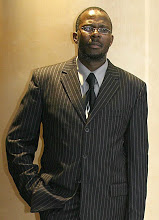
Nobel Peace Winner Mohammad Yunis, who's also a Bangladesh Banker and Economist has implored South African citizens to go an extra mile to create a better life as nothing 'was impossible when you put your mind, energy and time to realise it'.
Yunis echoed these sentiments when he delivered the seventh Nelson Mandela Annual Lecture in Johannesburg over the weekend.
As a response to the current global economic crisis, Yunis proposed the start of a "Social Business" agenda, which will be responsive to the needs and the upliftment of the poor masses.
"We need to start a business oin the basis of selflessness. We propose a second type of business alongside the existing one, we need to create a "social Business".
This is the business whose primary agenda is to address and solve social problems, not to make money for its investors" proposed Yunis.
He cited the political, social and economic battles he and fellow countrymenhad to endure when they were liberated in 19970's and the severe drought that his newly-independent country had suffered.
There is only one concept of business in the whole world, he says, and the sole purpose of business is to make money.
However, Yunis hasten to caution that the customary business theory is not lateral as its interpretation of the human being saw people being treated as one-dimensional.
Yunis alluded that after taking stock of the difficulties he and his fellow countrymen were made to endure in their new-found liberation, they had decided to take the bull by its horns and established a people's 'Grameen Bank'.
He conceeded that to date this financial institution seem to have escaped or have not suffered the dire financial straits imposed by the global recession.
He cajoled participants to learn about how the operations of developmental financial institutions in this country can take leaf from the Grameen Bank, and also questioned the bottlenecks that made it difficult if not impossible for small, medium and micro enterprises to survive in South Africa.
"The real question to ask is whether conventional banks, themselves, have the political will to understand what are it means to be credit worthy as they always complain about the poor people not worth enough to qualify for credit.
Let us look up to the Grameen Bank whose finances are locally-based and its source of money was local.
We're not connected with international banks, and their crisis could not reach us yet. The banks collapsing were based on rigid paperwork, such as guarantees, collateral and legal instruments between lender and borrower to back up the legal system of lending" warned Yunis.
Accordingly, he said, this could be attributed to greed of the capitalist system and the prevailing global political economy.
"Capitalism and the marketplace that has grown up aroundf the present business theory make no room for the selfless dimension of the people.
If the problems springing from the global financial crisis were overcome, the world would still be left with some fundamental questions about the effectiveness of capitalism in tracking many other unresolved issues" concluded Yunis.
Yunis paper was delivered some weeks after the South African Deputy Minister of Finance Nhlanhla Nene had also noted the drop in both corporate and household savings during his Budget vote speech.
He noted that SA's aggregate savings had been on a declining trend.
"S.A's savings performance remains dissappointing. The country's gross savings rate as a proportion of gross domestic product had risen to 17.1% in the first quarter of 2009, up from an average of 15.4% in 2008.
Therefore, after listening to both the S.A' s Deputy Minister of Finance and the Bangladesh banker and economist, the pertinent question to pose is how do the captains of industry and the political leadership restore our economic confidence?
Sunday, July 12, 2009

Wednesday, July 8, 2009
SMME TO TURN AROUND SA's ECONOMIC GROWTH:ZUNGU
Despite the current global economic recession, small and medium enterprises development was pivotal to the new South African government employment plans and it remains central to the country's search for an economic growth trajectory.
These sentiments were echoed by the prominent member of the World Economic Forum, Sandile Zungu, as he outlined his (personal) inputs and insights of what the SME's should be treated under the new South African administration led by President Jacob Zuma.
Zungu,who is also the Chairperson of the multi-diversfied Zungu Investments Company was giving a keynote address during the eThekwini Municipality Business Support and Markets Unit's SMME Breakfast at the Durban International Convention Centre on Wednesday.
"The SMME's are the engine of the South African economic future and it will always come second best in the globalised economic environment.
SMME account for 35% of the country's GDP, and it employs 3.8 million of which 34% of it is located within the informal sector" outlines Zungu
He decried the government of being unsupportive to SMME's in terms of procurement practices, regulations and taxation laws.
"South African regulations are not geared to support SMME's as it requires too much paperwork and most of the small, meduim and emerging enterpreneurs do not have a clue about financial administrative issues.
Why are SMME's made to pay so much tax, was the DTI, Planning Commission or the Department of Economic Development playing the ball to promote the sustainability of the SMME's, he asked.
However, Zungu noted that the new ANC-led administration had promised to make structural changes and, he urged participants, that public commitment was required since the government was even or had made the broad-based Black economic empowerment codes and guidelines simplified.
"Going forward, every SMME must consider the implications of the global financial crisis from the sub-prime crisis to debt crisis.
Globalisation and the myth of decoupling can be seen in the practical example in the automobile sector whereby it was reported that Barclays Bank had declined to bail-out its longterm business partner Dodge because it could not guarantee repayments timeously.
Local banks have begun to emulate international practise, as SMME's that do not have enough money in the bank to put collateral, were already feeling the pinch" said Zungu.
As the economy continues to decline the small, meduim and emerging entepreneur is the most affected but, added Zungu, these challenges create opportunities for real enterpreneurs such as Richard Bronson, the CEO of Virgin Airlines, who had started his business while with other passengers were stranded in Colombia.
"All the agents of the state and big business must come into the party to support SMME development because this sector (SMME) stands to grow beyond a 70% threshold of the country's GDP within the next ten years" mooted Zungu.
Even the Chief Executive Officer of SEDA eThekwini Protas Madlala concurred fully with bottlenecks and red tape experienced by the SMME's and accussed what he termed 'gatekeepers' whose interests are 'what is there for me in SMME development'.
"Capital flight can be seen daily among the township women that have organised themselves into co-operative societies and make school uniforms, yet, they do not get to supply local schools within their local areas or immediate municipalities.
Instead at the beginning of every year we find school principals that cajoles parents to buy the school uniforms from a certain established shops in the city centre.
How do we address this stereotyping of our own small and emerging enterpreneurs by the 'what is in for me' mentality by oour very own leadership? Was this playing any role in the promotion of Black economic empowerment? " asked Madlala
These sentiments were echoed by the prominent member of the World Economic Forum, Sandile Zungu, as he outlined his (personal) inputs and insights of what the SME's should be treated under the new South African administration led by President Jacob Zuma.
Zungu,who is also the Chairperson of the multi-diversfied Zungu Investments Company was giving a keynote address during the eThekwini Municipality Business Support and Markets Unit's SMME Breakfast at the Durban International Convention Centre on Wednesday.
"The SMME's are the engine of the South African economic future and it will always come second best in the globalised economic environment.
SMME account for 35% of the country's GDP, and it employs 3.8 million of which 34% of it is located within the informal sector" outlines Zungu
He decried the government of being unsupportive to SMME's in terms of procurement practices, regulations and taxation laws.
"South African regulations are not geared to support SMME's as it requires too much paperwork and most of the small, meduim and emerging enterpreneurs do not have a clue about financial administrative issues.
Why are SMME's made to pay so much tax, was the DTI, Planning Commission or the Department of Economic Development playing the ball to promote the sustainability of the SMME's, he asked.
However, Zungu noted that the new ANC-led administration had promised to make structural changes and, he urged participants, that public commitment was required since the government was even or had made the broad-based Black economic empowerment codes and guidelines simplified.
"Going forward, every SMME must consider the implications of the global financial crisis from the sub-prime crisis to debt crisis.
Globalisation and the myth of decoupling can be seen in the practical example in the automobile sector whereby it was reported that Barclays Bank had declined to bail-out its longterm business partner Dodge because it could not guarantee repayments timeously.
Local banks have begun to emulate international practise, as SMME's that do not have enough money in the bank to put collateral, were already feeling the pinch" said Zungu.
As the economy continues to decline the small, meduim and emerging entepreneur is the most affected but, added Zungu, these challenges create opportunities for real enterpreneurs such as Richard Bronson, the CEO of Virgin Airlines, who had started his business while with other passengers were stranded in Colombia.
"All the agents of the state and big business must come into the party to support SMME development because this sector (SMME) stands to grow beyond a 70% threshold of the country's GDP within the next ten years" mooted Zungu.
Even the Chief Executive Officer of SEDA eThekwini Protas Madlala concurred fully with bottlenecks and red tape experienced by the SMME's and accussed what he termed 'gatekeepers' whose interests are 'what is there for me in SMME development'.
"Capital flight can be seen daily among the township women that have organised themselves into co-operative societies and make school uniforms, yet, they do not get to supply local schools within their local areas or immediate municipalities.
Instead at the beginning of every year we find school principals that cajoles parents to buy the school uniforms from a certain established shops in the city centre.
How do we address this stereotyping of our own small and emerging enterpreneurs by the 'what is in for me' mentality by oour very own leadership? Was this playing any role in the promotion of Black economic empowerment? " asked Madlala
Tuesday, July 7, 2009
PRESIDENT JACOB ZUMA ENGAGES THE RSA JUDICIARY PRACTITIONERS
"Transformation of the justice system was not just about race and gender,but 'more' about making justice accessible to all" President Jacob Zuma told the 2nd Judicial Conference of South African Judges in Pretoria on Monday.
Justice, Zuma stressed an emphasis, should be of a high standard and must be attained 'justice seen to be done' without undue delay.
"There was a need to recognise the South African law, and we should work owards creating courts which are no longer instruments for the select few (elites) ut our courts must be representatine of the rights of all the masses of our people" observed Zuma
The appointment of the new judges must be biased to those committed to the new democratic order.
Even the Republic of South Africa's Constitutional Court Chief Justice Pius Nkonzo Langa seemed to be on the same wavelength with the country's president.
Langa urged his judges to ponder themselves about the 'essence of being a judge in such a diverse society like South Africa'.
Fellow South Africans,what is your take over the President's view onthe role of the judiciary in a transforming society?
Are we doing enough to speedily transform all the levers of power in our Rainbow Nation?
However, the President of the Supreme Court of Appeal, Judge Lex Mpati,has set the cat among pigeons regarding the transparent process that was used in appointing judges in South Africa at present.
Mpati was making his presentation about the independence of the judiciary on Tuesday.
"The only criticism that I have or rather that I have come across is that although the process of interviewing candidates for judicial appointments is open to the public and the media, the Judicial Services Commission deliberations on whether a particular candidate is suitable or not are held behind closed doors" noted Mpati.
The central and/or pertinent question to ask, posed Mpati, was how entirely transparent is the process of appointing judges in South Africa.
Further, Mpati cited the reservations held by the late Constitutional Court Chief Justice Ismail Mohamed in the late 1990's.
"The culture of judicial independence must be sustained with a process of appointment to the bench which is fair, transparent and reasonable, and in which judicial input is substantial and manifest" Mohamed had observed.
And the RSA President had noted that transformation of the judiciary must ensure improved access to justice as it addresses the issues of language,procedures and proceses, as well as other issues that may alienate the poor masses from the justice system.
"Envisaged in the constitution is a rationalised court system and the Superior Court's Bill aims to craete a single judiciary.
The Superior Court's Bill seeks to address, among others, the rationalisation of the composition, areas of jurisdiction and structures of the superior courts, which are still largely constituted in accordance with the Superior Court's Act of 1959" explained Zuma.
He further noted that even the promulgation of the South African Judicial Education Institute Act provides for the establishment of an institute to train both aspirant and serving judges and magistrates to improve the quality of the outputs of the courts.
'The training of aspirant judicial officers will go a long way to establish a wide pool of black and women practitioners from which more judges and magistrates may be appointed" concluded Zuma.
Meanwhile, there's been a call made by the judiciary to administer their own budget.
Chief Justice Langa has proposed that the judiciary should be empowered to administer courts and also regulate its own funds.
Commentators have argued that this proposal runs counter to the Superior Court's Bill which proposes that the administration of the courts remain the preserve of the Department of Justice.
Langa has also implored judges to be cognisant of the case management rules, current rules of practise and procedures to ensure that these factored to promote rather than obstruct people's access to courts.
Langa also concurred with the President of South Africa's sentiments regarding the independence of the judiciary.
"Judges will continue to adjudicate matters fearlessly, we wil not bow to any pressure regardless of the source as we will be guided by conscience and the rule of law. We are only accountable to the Constitution and judges are committed work, transform the system for the benefit of all the South African communities" noted Langa.
Justice, Zuma stressed an emphasis, should be of a high standard and must be attained 'justice seen to be done' without undue delay.
"There was a need to recognise the South African law, and we should work owards creating courts which are no longer instruments for the select few (elites) ut our courts must be representatine of the rights of all the masses of our people" observed Zuma
The appointment of the new judges must be biased to those committed to the new democratic order.
Even the Republic of South Africa's Constitutional Court Chief Justice Pius Nkonzo Langa seemed to be on the same wavelength with the country's president.
Langa urged his judges to ponder themselves about the 'essence of being a judge in such a diverse society like South Africa'.
Fellow South Africans,what is your take over the President's view onthe role of the judiciary in a transforming society?
Are we doing enough to speedily transform all the levers of power in our Rainbow Nation?
However, the President of the Supreme Court of Appeal, Judge Lex Mpati,has set the cat among pigeons regarding the transparent process that was used in appointing judges in South Africa at present.
Mpati was making his presentation about the independence of the judiciary on Tuesday.
"The only criticism that I have or rather that I have come across is that although the process of interviewing candidates for judicial appointments is open to the public and the media, the Judicial Services Commission deliberations on whether a particular candidate is suitable or not are held behind closed doors" noted Mpati.
The central and/or pertinent question to ask, posed Mpati, was how entirely transparent is the process of appointing judges in South Africa.
Further, Mpati cited the reservations held by the late Constitutional Court Chief Justice Ismail Mohamed in the late 1990's.
"The culture of judicial independence must be sustained with a process of appointment to the bench which is fair, transparent and reasonable, and in which judicial input is substantial and manifest" Mohamed had observed.
And the RSA President had noted that transformation of the judiciary must ensure improved access to justice as it addresses the issues of language,procedures and proceses, as well as other issues that may alienate the poor masses from the justice system.
"Envisaged in the constitution is a rationalised court system and the Superior Court's Bill aims to craete a single judiciary.
The Superior Court's Bill seeks to address, among others, the rationalisation of the composition, areas of jurisdiction and structures of the superior courts, which are still largely constituted in accordance with the Superior Court's Act of 1959" explained Zuma.
He further noted that even the promulgation of the South African Judicial Education Institute Act provides for the establishment of an institute to train both aspirant and serving judges and magistrates to improve the quality of the outputs of the courts.
'The training of aspirant judicial officers will go a long way to establish a wide pool of black and women practitioners from which more judges and magistrates may be appointed" concluded Zuma.
Meanwhile, there's been a call made by the judiciary to administer their own budget.
Chief Justice Langa has proposed that the judiciary should be empowered to administer courts and also regulate its own funds.
Commentators have argued that this proposal runs counter to the Superior Court's Bill which proposes that the administration of the courts remain the preserve of the Department of Justice.
Langa has also implored judges to be cognisant of the case management rules, current rules of practise and procedures to ensure that these factored to promote rather than obstruct people's access to courts.
Langa also concurred with the President of South Africa's sentiments regarding the independence of the judiciary.
"Judges will continue to adjudicate matters fearlessly, we wil not bow to any pressure regardless of the source as we will be guided by conscience and the rule of law. We are only accountable to the Constitution and judges are committed work, transform the system for the benefit of all the South African communities" noted Langa.
Sunday, July 5, 2009
NIGERIA CROWNED AFRICAN BEACH SOCCER CHAMPS
The Super Eagles were crowned the African Beach Soccer champions during the 2009 FIFA African Beach soccer qualifiers that were staged in Durban.
The final score was a convincing marghin of - as the Nigerians ran riot all over the Ivorians.
The third and fourth runners-up game had witnessed the Terranga Lions thumping the Egyptian team by 6-4 margin.
However, the beauty of beach soccer will see both finalists representing the continent during the FIFA World Cup finals to be played between 16-22 November 2009 in the Dubai beachfront holiday resort.
The final score was a convincing marghin of - as the Nigerians ran riot all over the Ivorians.
The third and fourth runners-up game had witnessed the Terranga Lions thumping the Egyptian team by 6-4 margin.
However, the beauty of beach soccer will see both finalists representing the continent during the FIFA World Cup finals to be played between 16-22 November 2009 in the Dubai beachfront holiday resort.
Saturday, July 4, 2009
FIFA FIREWORKS AS AFRICANS FIGHT FOR DUBAI FINALS
The 2009 FIFA World Cup Beach Soccer Qualifiers currently played in Durban's beachfront has witnessed the best ever games played since the new sporting code was introduced in the continent, says the Durban-based leading beach socer admininistrator.
The games that were played on Saturday to produce two teams that will participate in the final on Sunday, whereby both finalists qaulify for a return flight ticket paid by FIFA, to the 2009 World Cup Beach Soccer finals to be staged in Dubai between 16-22 November 2009 far surpassed all the preliminary games played so far.
The first game had seen Morrocco playing Mozambique from the midday kick off, and the spirit exhibited by both teams was clear proof that the journey to the Dubai finals would be made by players of sterner stuff.
However, at the end of the first semi's the final score saw Morrocco humilliating Mozambique with a wide margin of 9-3 defeat.
The second game saw Cote D'Ivoire playing against Egypt to produce a team for the finals on Sunday.
The tempo displayed during this game was out of this world as a total of sixteen goals were scored.
Cote D'Ivoire emerged victorious during the penalty shoot out by winning with a narrow 4-3.
The final semi final game pitted two African powerhouses that had both represented the continent in last year's FIFA World Cup Beach soccer finals held at Marseille, France in 2008.
The first half had seen Senegal leading Nigeria by 3-0 score until going to interval at 4-1 score.
To the uninitiated, beach soccer is played at three halfs of fifteen minutes to make the full game finish at forty-five minutes.
During the second half neither teammanaged to score, and fireworks were left for the last fifteen minutes.
Nigeria had managed to equalised to make the score 4-4 within the first five minutes played in the last half.
And true to the game's billing as a 'Do or Die' for the Dubai return airfare ticket, both teams exhibited the best beach soccer seen in Africa since the FIFA World Cup Beach soccer Qualifiers were introduced in Africa.
The Nigerian Super Eagles managed to score seven goals to defeat the Terrenga Lions with a narrow 7-6 scoreline, and qualifed to play Cote D'Ivoire in the finals on Sunday.
Both teams (Cote D'Ivoire and Nigeria) have booked themselves return flight tickets in the 2009 FIFA World Cup Beach Soccer finals as they have qualifed to represent the continent in the showpiece to be staged in Dubai later this year.
eThekwini Municipality Special Projects Officer Lunga Lamola told this writer that the game played between Nigeria vs Senegal and 'its fireworks was the best beach socccer game played since Durban started hosting the beach soccer games four years ago'.
The Special Projects Unit are the municipality structure entrusted with the task of overseeing the formation of the first-ever professional beach soccer league in South Africa.
Ends
The games that were played on Saturday to produce two teams that will participate in the final on Sunday, whereby both finalists qaulify for a return flight ticket paid by FIFA, to the 2009 World Cup Beach Soccer finals to be staged in Dubai between 16-22 November 2009 far surpassed all the preliminary games played so far.
The first game had seen Morrocco playing Mozambique from the midday kick off, and the spirit exhibited by both teams was clear proof that the journey to the Dubai finals would be made by players of sterner stuff.
However, at the end of the first semi's the final score saw Morrocco humilliating Mozambique with a wide margin of 9-3 defeat.
The second game saw Cote D'Ivoire playing against Egypt to produce a team for the finals on Sunday.
The tempo displayed during this game was out of this world as a total of sixteen goals were scored.
Cote D'Ivoire emerged victorious during the penalty shoot out by winning with a narrow 4-3.
The final semi final game pitted two African powerhouses that had both represented the continent in last year's FIFA World Cup Beach soccer finals held at Marseille, France in 2008.
The first half had seen Senegal leading Nigeria by 3-0 score until going to interval at 4-1 score.
To the uninitiated, beach soccer is played at three halfs of fifteen minutes to make the full game finish at forty-five minutes.
During the second half neither teammanaged to score, and fireworks were left for the last fifteen minutes.
Nigeria had managed to equalised to make the score 4-4 within the first five minutes played in the last half.
And true to the game's billing as a 'Do or Die' for the Dubai return airfare ticket, both teams exhibited the best beach soccer seen in Africa since the FIFA World Cup Beach soccer Qualifiers were introduced in Africa.
The Nigerian Super Eagles managed to score seven goals to defeat the Terrenga Lions with a narrow 7-6 scoreline, and qualifed to play Cote D'Ivoire in the finals on Sunday.
Both teams (Cote D'Ivoire and Nigeria) have booked themselves return flight tickets in the 2009 FIFA World Cup Beach Soccer finals as they have qualifed to represent the continent in the showpiece to be staged in Dubai later this year.
eThekwini Municipality Special Projects Officer Lunga Lamola told this writer that the game played between Nigeria vs Senegal and 'its fireworks was the best beach socccer game played since Durban started hosting the beach soccer games four years ago'.
The Special Projects Unit are the municipality structure entrusted with the task of overseeing the formation of the first-ever professional beach soccer league in South Africa.
Ends
Friday, July 3, 2009
DURBAN TO HOST ANOTHER WORLD CUP FINAL IN 2011?
For two seasons running South Africa may find herself hosting two FIFA major tournaments, and this information was revealed by the South African Football Association NEC member, Obakeng Molatedi, that Durban stands a good chance of hosting both the opening and the final game of the competition.
Molatedi, who's the SAFA's chief representative in the 2009 FIFA World Cup Beach soccer qualifying games currently played in Durban for the fourth consecutive year, has broadly pronounced that the country's football-controlling body was fully supportive of the intentions to lobby FIFA for the 2011 World Cup Beach soccer finals to be staged in the country.
The South African 2010 Local Organising Committe has pencilled one of the semi finals to be hosted at the Moses Mabhida Stadium next year during the FIFA World Cup soccer finals.
Beachsoccer Worldwide Media Officer Hans van Damme informed this writer that applications for the 2011 hosting rights had opened in Barcelona, Spain last month.
He further explained that the deadline to receive application was set for March 2010 and already five beach-soccer playing nations had submitted their proposal.
"South Africa will be facing stiff competition from other five beach-soccer playing nations as they intend to bid for the 2011 FIFA World Cup Beach soccer finals. The name of the country awarded the hosting rights will be announced in July 2010" said van Damme.
The person spearheading the campaign to host the beach soccer finals in South Africa is none other than that former South African goal-scoring machine Mark Williams.
This soccer personality's football conquests, among others, are the two memorable goals he scored against Tunisia national teamduring the South African national team historic African Nation's Cup victory at Ellis Park Stadium in February 1996.
That victory had made Bafana Bafana national team the number one continental team, and also spurred the country to occupy a FIFA Top 20 rating throughout the world.
"Together with the South African beach soccer administrators, in particular the city of Durban, we intend to bid for the 2011 World Cup beach soccer finals and we stand a good chance to be awarded the hosting rights as Durban was proving itself as the 'Capital of African beach soccer' over the past four years.
We're presently grooming a generation of young beach soccer stars by conducting coaching clinics with kids ranging from 11-17 years as we want to develop a culture of beach soccer as a long-term sustainable programme" explained Williams.
However, what might prove a stumbling block to FIFA awarding South Africa the hosting rights for 2011 beach soccer finals is the fact that the country presently do not have a formal beach soccer league, compared to the other nations bidding to host the beach soccer spectacular.
But the SAFA NEC member, Molatedi, assurred this writer that 'establishing national beach soccer league was work in progress', and further stated that the eThekwini Municipality city fathers were the first to submit proposals to the SAFA headquarters.
Meanwhile, the third day of the FIFA World Cup Beach soccer qualifying games saw Nigeria being the first time to qualify for for the semi finals by beating Egypt with 6-5 scoreline.
Senegal, who had beaten Mozambique 10-0 in last year's corresponding fixture, again thumped Mozambique with a narrow 3-2 victory to qualify for the semies.
South African national team, aptly called 'Banana Banana' continued to embarras hundreds of supporting fans when they were defeated by Cote D'Ivoire 6-7 in extra time.
Ends
Molatedi, who's the SAFA's chief representative in the 2009 FIFA World Cup Beach soccer qualifying games currently played in Durban for the fourth consecutive year, has broadly pronounced that the country's football-controlling body was fully supportive of the intentions to lobby FIFA for the 2011 World Cup Beach soccer finals to be staged in the country.
The South African 2010 Local Organising Committe has pencilled one of the semi finals to be hosted at the Moses Mabhida Stadium next year during the FIFA World Cup soccer finals.
Beachsoccer Worldwide Media Officer Hans van Damme informed this writer that applications for the 2011 hosting rights had opened in Barcelona, Spain last month.
He further explained that the deadline to receive application was set for March 2010 and already five beach-soccer playing nations had submitted their proposal.
"South Africa will be facing stiff competition from other five beach-soccer playing nations as they intend to bid for the 2011 FIFA World Cup Beach soccer finals. The name of the country awarded the hosting rights will be announced in July 2010" said van Damme.
The person spearheading the campaign to host the beach soccer finals in South Africa is none other than that former South African goal-scoring machine Mark Williams.
This soccer personality's football conquests, among others, are the two memorable goals he scored against Tunisia national teamduring the South African national team historic African Nation's Cup victory at Ellis Park Stadium in February 1996.
That victory had made Bafana Bafana national team the number one continental team, and also spurred the country to occupy a FIFA Top 20 rating throughout the world.
"Together with the South African beach soccer administrators, in particular the city of Durban, we intend to bid for the 2011 World Cup beach soccer finals and we stand a good chance to be awarded the hosting rights as Durban was proving itself as the 'Capital of African beach soccer' over the past four years.
We're presently grooming a generation of young beach soccer stars by conducting coaching clinics with kids ranging from 11-17 years as we want to develop a culture of beach soccer as a long-term sustainable programme" explained Williams.
However, what might prove a stumbling block to FIFA awarding South Africa the hosting rights for 2011 beach soccer finals is the fact that the country presently do not have a formal beach soccer league, compared to the other nations bidding to host the beach soccer spectacular.
But the SAFA NEC member, Molatedi, assurred this writer that 'establishing national beach soccer league was work in progress', and further stated that the eThekwini Municipality city fathers were the first to submit proposals to the SAFA headquarters.
Meanwhile, the third day of the FIFA World Cup Beach soccer qualifying games saw Nigeria being the first time to qualify for for the semi finals by beating Egypt with 6-5 scoreline.
Senegal, who had beaten Mozambique 10-0 in last year's corresponding fixture, again thumped Mozambique with a narrow 3-2 victory to qualify for the semies.
South African national team, aptly called 'Banana Banana' continued to embarras hundreds of supporting fans when they were defeated by Cote D'Ivoire 6-7 in extra time.
Ends
UNEMPLOYMENT RISES THROUGHOUT EUROPE
The current global economic meltdown has affected both well-established, developed and developing economies alike.
In South Africa this week the umbrella trade union federation Cosatu had a three-day summit on education skills development attended by the union's shop stewards from the nine provinves. The main theme of the conference was to tackle the skills development agenda that remains critical towards addressing the skills shortage affecting the labour market.
Delivering the state of the province address recently, KwaZulu-Natal Premier Dr Zweli Mkhize noted that the province's manufacturing sector had already lost some 269 000 jobs since the beginning of the global economic crisis.
Notable commentators have conceeded that the way forward in addressing the present high unemployment quagmire would be to re-think the skills development strategy in relation to the workplace, and/or the 'learning environment' in the lingua of the Sector Education and Training Authorities (SETA).
The South African government is also reported to have transferred the SETAs from the Labour Ministry to the Ministry of Higher Learning as a progressive measure aimed at getting to grips with the high number of qualified people (graduates) that were encountering difficulties in entering the labour market in the country.
CNN Live channel on Thursday ran the 'Quest Means Business'' show where it was anounced that unemployment figures had risen out of proportion in central Europe due to the economic recession.
Viewers were told that Eurozone unemployment had climbed to 5.9% in May 2009 and Spain was reported to be suffering the biggest unemployment of 18.7% to date.
Even Germany, France, and England are regarded as the most worst-hit economies, and that some 3.4 million people in United States have lalready lost their jobs in the past year alone.
Studio guest Tim Gillian, CEO Adecco, North America, conceeded that fears were mounting of jobless recovery in the United States of America.
According to Gillian, US unemployment rate has hit a record 26-year high and was exceeding forecasts by a wide margin as the unemployment rate presently stands at 9.5 percent.
Even the hullaballoo that accompanied President Barack Obama ascendancy to the highest office in America has plummented to an all-time low.
To lay the blame solely to the Oval Office regarding the global economic crisis will be a misnomer, yet, people on the ground look upon the head of state to provide answers to bread and butter issues.
For the past two years since the 2007 ANC Polokwane conference, the mainstream media networks have been citing numerous statements regarding the policy framework to be pursued by the the new administration that ascended to Union Buildings, Pretoria after the fourth national elections (22 April 2009) in South Africa.
Back to the Quest show, interviewed Obama during the show, he outlined that there 's been a net loss of 467 000 US jobs in June 2009 and her unemployment rate had risen to 9.5 percent.
"We have morden progress towards clean-energy economy and we must forge forward to a new progressive future against the present global economic crisis" said Obama.
And South Africa's Minister of Higher Education Blade Nzimande is spot on to call the country's citizens to re-think new strategies both at the institutions of higher learning, SETAs and 'learning institutions' about how was the high unemployment rate affecting the working class in general and also how was the democratic government and all its policy framework treating her citizens.
Chief among Nzimande's serious concerns was the vulnerability and the exploitation of the youth in this country and he says they were hired as casual labourers or were being drawn to crime.
Nzimande has also cited the ministerial report that was commissioned by his predecessor Dr Naledi Pandor that found that young people formed 415 of the country's population.
"We're calling for a rethink of S.A's skills development strategy and the relationship between youth, the National Skills Fund and the Sector Education and Training Authorities (SETAs).
What new strategies are putting in place to make our youth marketable for sustainable employment opportunities" asks Nzimande.
He further reiterated figures he had presented to Parliament during Budget vote that 2.8 of the country's 6.8 million youth between the ages of 18 and 24 years were unemployed.
Tthe global financial crisis was having a domino effect on the poorest of the poor, the working class at the shopfloor level.
No person knows it better better than the Cosatu Secretary-General Zwelinzima Vavi who engaged robustly his unions shop stewards when he questioned the capitalist strange-hold that continues to affect adversely the working class.
"We cannot afford to discuss skills 'shortage' any longer in a strange jargon that continues to disempower the ordinary workers" cautined Vavi as he urged Cosatu shop stewards and ordinary workers to craft Skills Development programmes.
In South Africa this week the umbrella trade union federation Cosatu had a three-day summit on education skills development attended by the union's shop stewards from the nine provinves. The main theme of the conference was to tackle the skills development agenda that remains critical towards addressing the skills shortage affecting the labour market.
Delivering the state of the province address recently, KwaZulu-Natal Premier Dr Zweli Mkhize noted that the province's manufacturing sector had already lost some 269 000 jobs since the beginning of the global economic crisis.
Notable commentators have conceeded that the way forward in addressing the present high unemployment quagmire would be to re-think the skills development strategy in relation to the workplace, and/or the 'learning environment' in the lingua of the Sector Education and Training Authorities (SETA).
The South African government is also reported to have transferred the SETAs from the Labour Ministry to the Ministry of Higher Learning as a progressive measure aimed at getting to grips with the high number of qualified people (graduates) that were encountering difficulties in entering the labour market in the country.
CNN Live channel on Thursday ran the 'Quest Means Business'' show where it was anounced that unemployment figures had risen out of proportion in central Europe due to the economic recession.
Viewers were told that Eurozone unemployment had climbed to 5.9% in May 2009 and Spain was reported to be suffering the biggest unemployment of 18.7% to date.
Even Germany, France, and England are regarded as the most worst-hit economies, and that some 3.4 million people in United States have lalready lost their jobs in the past year alone.
Studio guest Tim Gillian, CEO Adecco, North America, conceeded that fears were mounting of jobless recovery in the United States of America.
According to Gillian, US unemployment rate has hit a record 26-year high and was exceeding forecasts by a wide margin as the unemployment rate presently stands at 9.5 percent.
Even the hullaballoo that accompanied President Barack Obama ascendancy to the highest office in America has plummented to an all-time low.
To lay the blame solely to the Oval Office regarding the global economic crisis will be a misnomer, yet, people on the ground look upon the head of state to provide answers to bread and butter issues.
For the past two years since the 2007 ANC Polokwane conference, the mainstream media networks have been citing numerous statements regarding the policy framework to be pursued by the the new administration that ascended to Union Buildings, Pretoria after the fourth national elections (22 April 2009) in South Africa.
Back to the Quest show, interviewed Obama during the show, he outlined that there 's been a net loss of 467 000 US jobs in June 2009 and her unemployment rate had risen to 9.5 percent.
"We have morden progress towards clean-energy economy and we must forge forward to a new progressive future against the present global economic crisis" said Obama.
And South Africa's Minister of Higher Education Blade Nzimande is spot on to call the country's citizens to re-think new strategies both at the institutions of higher learning, SETAs and 'learning institutions' about how was the high unemployment rate affecting the working class in general and also how was the democratic government and all its policy framework treating her citizens.
Chief among Nzimande's serious concerns was the vulnerability and the exploitation of the youth in this country and he says they were hired as casual labourers or were being drawn to crime.
Nzimande has also cited the ministerial report that was commissioned by his predecessor Dr Naledi Pandor that found that young people formed 415 of the country's population.
"We're calling for a rethink of S.A's skills development strategy and the relationship between youth, the National Skills Fund and the Sector Education and Training Authorities (SETAs).
What new strategies are putting in place to make our youth marketable for sustainable employment opportunities" asks Nzimande.
He further reiterated figures he had presented to Parliament during Budget vote that 2.8 of the country's 6.8 million youth between the ages of 18 and 24 years were unemployed.
Tthe global financial crisis was having a domino effect on the poorest of the poor, the working class at the shopfloor level.
No person knows it better better than the Cosatu Secretary-General Zwelinzima Vavi who engaged robustly his unions shop stewards when he questioned the capitalist strange-hold that continues to affect adversely the working class.
"We cannot afford to discuss skills 'shortage' any longer in a strange jargon that continues to disempower the ordinary workers" cautined Vavi as he urged Cosatu shop stewards and ordinary workers to craft Skills Development programmes.
Subscribe to:
Posts (Atom)