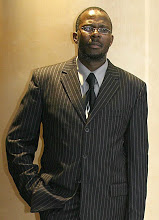
Nkonzwenhle Mqadi Presently reading "A New Earth 'Awakening to your Life's perpose' " by Eckhart Tolle "We each have the power to make a difference. A New Earth begins with you .... " says Tolle
Nkonzwenhle Mqadi "Acceptance 'of Yourself' is such an important commodity, some have called it the 'First Law of Personal Growth' " says Peter McWilliams
Eckhart Tolee provides the spiritual background for anyone to make their own life -and therefore the world - better and more meaningful.
Tolle exposes the fears that hAng over all of US and shows how eachof US can find happiness and health through the series of simple, life-affirming steps.
A 'New Earth' is a stunning journey of self-enlightenment as it strips away the illusions we live-0by and provides a new basis for personal spirituality and self-improvement.
My Favourite Chapter is titled; "Beyond Ego: Your True Identity'
"When the ego is at war, know that it is no more than an illusion that is fighting to survive.
All that is required to become free of the ego is to be aware of it, since Awareness and Ego are incompatible.
Awareness is the power that is concelead withinthe present moment.
We may also call it "Presence" 'make my presence felt'.
NB. Only Presence can free you of the Ego, and you can only be present Now, not Yesterday or Tomorrow.
Only Presence can undo the (You) past and transform your state of consciousness.
Thursday, May 21, 2009

Tuesday, May 19, 2009
RSA NATIONAL PLANNING COMMISSION: WILL IT DELIVER TO CITIZENS?
DESPITE the rumblings from certain quarters over tha 're-organised and better aligned' President Jacob Zuma's Cabinet that was announced on Mother's Day (10 May 2009), there have emerged genteel murmurs and strong debate about the National Planning Commission and the person entrusted to lead it.
Was the honourable Trevor Manuel the RIGHT person to drive the NPC, and if so, will the majority South Africas-poorest of the poor- ever realise the beter life for all under the country's leadership by Msholozi and beyond?
Will the renowned 'anti-poor programmes Manuel' ever be biased towards the upliftment of the downtrodden people?
Will the central planning commission have statutory powers to recommend policy formulations that aim to benefit the majority South Africans?
Surely, as Minister of Finance over the past 10-years, Manuel became the darling of the captains of industry and also became the envy of the citizens that were still trapped under the so-called Second Economy.
Permit me to remind to hasten to remind you that the ANC's 50th Conference held in Mafeking (December 1997) had adopted a definitive resolution on economic policy.
One fundamental clause reads; "Conference re-affirms that our macro-economic framework policies must be directed to advancing the RDP. We are not pursuing macro balances for their own sake, but to create conditions for sustainable growth, development and reconstruction.
The strategy for Growth, Employment and Redistribution (GEAR) is aimed at giving effect to the realisation of the RDP through the maintainance of macro balances and elaborates a set of mutually-reinforcing instruments".
However, it must be noted that immediately thereafter some eminent scholars, including the former RSA President Thabo Mbeki, then Deputy President of the Republic, and his fellow cronies including then, Minister of Finance Trevor Manuel, were captured on the mass-media networks stating that GEAR and RDP haved a totally different objective but 'its implemantation was necessary to ensure the sustainability of the RDP'.
From such utterances by ANC heavyweights and to the tabling of Gear in Parliament on June 14,1996, all talk and mention of RDP to drive the government policy formulation evaporated into thin air.
The then Deputy President of labour federation Zwelinzima Vavi was qouted in Cosatu's economic policy debate 'Social Equity' lamenting Manuel's conservative fiscal policy and the dire effects it was to have to the working class.
Before dwelling deeper on Manuel's shortcomings as a people-centred leader, lets reflect on Zuma's announcement of his Cabinet make-up, and he boldly pronounced that ' we created a structure that would enable us to achieve visible and tangible socio-economic development in the country over the next five years'.
Accordingly, he said, the structure of the Cabinet and national departments has therefore been re-organised to achieve better alignment between the structure, our electoral mandate as per our (ANC) election manifesto, and the developmental challenges that need to receive immediate attention from government.
And the very same Head of the National Planning Commission is on record defying resolutions expoused by his party, ANC, a decade earlier as the rumsacked over GEAR to South African citizens as an influential team player to that notorious " '96 Class Project".
"No matter what the misguided critics may argue, it is no use merely making a long list of promises. Making promises is easy--especially during election campaigns-- but carrying them out as government is very much more difficult.
Gear calls for a period of fiscal consolidation and Gear does not deal with black economic empowerment at all" argued Manuel (Sunday Times 13/8/06).
Does these sentiments run contrary to the multitudes that cast their votes next to Msholozi hoping that the ANC shall be true to their election promises in creating 'A Better Life for All' ? One is tempted not to believe that Trevor Manuel can at his whims behave as a loose canon.
Words uttered by the President himself when he announced his Cabinet are reassuring.
"Following extensive research on international models on how governments in other parts of the world plan and monitor perfomance, we have decided to establish a National Planning Commission and the Ministry for Perfomance Monitoring and Evaluation. Both ministries will be located and administered in the Presidency" Zuma said.
Coming from a socialistic background, one is but tempted to take stock of the blatant failures by the central government to fasttrack developmental programmes to benefit the previously-disadvantaged communities at a time when the incumbent Head of NPC was playing a critical role in the state budget allocation be it Gear, Asgisa, Jipsa, and you name them.
Under his stewardship as minister of finance, South Africa's rating plummented and the country is still battling to achieve the average 6% growth rate becausethe macroeconomic policy framework runs counter to the creation of an improved standard of living to the residents of Orange Farm, Cato Manor, Lindelani or Phillipi informal settlements.
IDASA Executive Director Paul Graham is on record stating that citizens have an amenable right to question how they were represented in their democratically-elected government.
"On March9, 2009 we presented to the Executive the findings of 4th Afrobarometer survey that we had conducted in 19-African which measures public attitudes on democracy and its alternatives, evaluations of the quality of governanance and economic performance.
The "South Africans' views of government perfomance and possible implications for policy making" can be used as a way of describing the political situation that faces the new government at the beginning of its term" says Graham.
Paradoxically, the critical challenge for a fresh start post Mbeki era, is to take a more comprehensive view of the socio-economic development for all South African citizens.
Synergy and corporate governance, surely, will be fasttracked after the creation of the perfomance monitoring and evaluation competency desk in the Presidency.
Even KwaZulu-Natal Premier Dr Zweli Mkhize announced during his inauguration, the two ministries housed in the Presidency will also be duplicated in provincial legislatures.
Therefore, across board there's a mandate to constantly monitor, appraise elected government officials and evaluate their perfomance in service delivery which must be commended.
However, will the NPC under the stewardship of Trevor Manuel, play any significant role in transforming the South African society and the economy to benefit the majority people in South Africa, in particular, the srious challenges of unemployment, poverty, transformation in the judiciary as seen in the Judicial Services Commission versus Cape Town Judge President legal quagmire, government open policy on HIV-Aids treatment facilities and the ever-increasing social inequalities prevalent in South African society?
Was the NPC armed with a blueprint that was aimed to usher in a mixed economy, a sustainable economy, or an economy that is fully integrated (connected) to the global political economy imperatives?
Will the new Department of Economic Development focus on economic planning, and promote or sustain small emerging contractors, small-scale farmers in rural areas and provide seed money to the co-operative societies?
Doest the NPC have the capacity to accelerate growth and the economy in the definition of a common national agenda?
Why must the National Planning Commission under the astute leadership of M,inister Trevor Manuel fail on this constitutional democracy mandate because the above form the basis of the paromount resolutions adopted by the ruling-party cadres during its 52nd Polokwane conference in December 2007.
Was the honourable Trevor Manuel the RIGHT person to drive the NPC, and if so, will the majority South Africas-poorest of the poor- ever realise the beter life for all under the country's leadership by Msholozi and beyond?
Will the renowned 'anti-poor programmes Manuel' ever be biased towards the upliftment of the downtrodden people?
Will the central planning commission have statutory powers to recommend policy formulations that aim to benefit the majority South Africans?
Surely, as Minister of Finance over the past 10-years, Manuel became the darling of the captains of industry and also became the envy of the citizens that were still trapped under the so-called Second Economy.
Permit me to remind to hasten to remind you that the ANC's 50th Conference held in Mafeking (December 1997) had adopted a definitive resolution on economic policy.
One fundamental clause reads; "Conference re-affirms that our macro-economic framework policies must be directed to advancing the RDP. We are not pursuing macro balances for their own sake, but to create conditions for sustainable growth, development and reconstruction.
The strategy for Growth, Employment and Redistribution (GEAR) is aimed at giving effect to the realisation of the RDP through the maintainance of macro balances and elaborates a set of mutually-reinforcing instruments".
However, it must be noted that immediately thereafter some eminent scholars, including the former RSA President Thabo Mbeki, then Deputy President of the Republic, and his fellow cronies including then, Minister of Finance Trevor Manuel, were captured on the mass-media networks stating that GEAR and RDP haved a totally different objective but 'its implemantation was necessary to ensure the sustainability of the RDP'.
From such utterances by ANC heavyweights and to the tabling of Gear in Parliament on June 14,1996, all talk and mention of RDP to drive the government policy formulation evaporated into thin air.
The then Deputy President of labour federation Zwelinzima Vavi was qouted in Cosatu's economic policy debate 'Social Equity' lamenting Manuel's conservative fiscal policy and the dire effects it was to have to the working class.
Before dwelling deeper on Manuel's shortcomings as a people-centred leader, lets reflect on Zuma's announcement of his Cabinet make-up, and he boldly pronounced that ' we created a structure that would enable us to achieve visible and tangible socio-economic development in the country over the next five years'.
Accordingly, he said, the structure of the Cabinet and national departments has therefore been re-organised to achieve better alignment between the structure, our electoral mandate as per our (ANC) election manifesto, and the developmental challenges that need to receive immediate attention from government.
And the very same Head of the National Planning Commission is on record defying resolutions expoused by his party, ANC, a decade earlier as the rumsacked over GEAR to South African citizens as an influential team player to that notorious " '96 Class Project".
"No matter what the misguided critics may argue, it is no use merely making a long list of promises. Making promises is easy--especially during election campaigns-- but carrying them out as government is very much more difficult.
Gear calls for a period of fiscal consolidation and Gear does not deal with black economic empowerment at all" argued Manuel (Sunday Times 13/8/06).
Does these sentiments run contrary to the multitudes that cast their votes next to Msholozi hoping that the ANC shall be true to their election promises in creating 'A Better Life for All' ? One is tempted not to believe that Trevor Manuel can at his whims behave as a loose canon.
Words uttered by the President himself when he announced his Cabinet are reassuring.
"Following extensive research on international models on how governments in other parts of the world plan and monitor perfomance, we have decided to establish a National Planning Commission and the Ministry for Perfomance Monitoring and Evaluation. Both ministries will be located and administered in the Presidency" Zuma said.
Coming from a socialistic background, one is but tempted to take stock of the blatant failures by the central government to fasttrack developmental programmes to benefit the previously-disadvantaged communities at a time when the incumbent Head of NPC was playing a critical role in the state budget allocation be it Gear, Asgisa, Jipsa, and you name them.
Under his stewardship as minister of finance, South Africa's rating plummented and the country is still battling to achieve the average 6% growth rate becausethe macroeconomic policy framework runs counter to the creation of an improved standard of living to the residents of Orange Farm, Cato Manor, Lindelani or Phillipi informal settlements.
IDASA Executive Director Paul Graham is on record stating that citizens have an amenable right to question how they were represented in their democratically-elected government.
"On March9, 2009 we presented to the Executive the findings of 4th Afrobarometer survey that we had conducted in 19-African which measures public attitudes on democracy and its alternatives, evaluations of the quality of governanance and economic performance.
The "South Africans' views of government perfomance and possible implications for policy making" can be used as a way of describing the political situation that faces the new government at the beginning of its term" says Graham.
Paradoxically, the critical challenge for a fresh start post Mbeki era, is to take a more comprehensive view of the socio-economic development for all South African citizens.
Synergy and corporate governance, surely, will be fasttracked after the creation of the perfomance monitoring and evaluation competency desk in the Presidency.
Even KwaZulu-Natal Premier Dr Zweli Mkhize announced during his inauguration, the two ministries housed in the Presidency will also be duplicated in provincial legislatures.
Therefore, across board there's a mandate to constantly monitor, appraise elected government officials and evaluate their perfomance in service delivery which must be commended.
However, will the NPC under the stewardship of Trevor Manuel, play any significant role in transforming the South African society and the economy to benefit the majority people in South Africa, in particular, the srious challenges of unemployment, poverty, transformation in the judiciary as seen in the Judicial Services Commission versus Cape Town Judge President legal quagmire, government open policy on HIV-Aids treatment facilities and the ever-increasing social inequalities prevalent in South African society?
Was the NPC armed with a blueprint that was aimed to usher in a mixed economy, a sustainable economy, or an economy that is fully integrated (connected) to the global political economy imperatives?
Will the new Department of Economic Development focus on economic planning, and promote or sustain small emerging contractors, small-scale farmers in rural areas and provide seed money to the co-operative societies?
Doest the NPC have the capacity to accelerate growth and the economy in the definition of a common national agenda?
Why must the National Planning Commission under the astute leadership of M,inister Trevor Manuel fail on this constitutional democracy mandate because the above form the basis of the paromount resolutions adopted by the ruling-party cadres during its 52nd Polokwane conference in December 2007.
Friday, May 15, 2009
XENOPHOBIA & WOMEN ABUSE STILL RAMPANT
XENOPHOBIC tendencies and its attendant heinous and shameful violence against the most vulnerable (women & children) remain a critical challenge to the wider civil society, not just in the Republic of South Africa but all over the African continent.
Over the Africa Day month, in South Africa May 11, 2009 is regarded as the 'Anniversary of Shame' because it is the day our country witnessed the most shameful and barbaric violence meted to a fellow African by his ilk since the demise of aparheid.
Statistics reveal that some 62 people were killed in a wave of xenophobic attackes that started from the Alexander Township's (north of Johannesburg) Ramaphosa informal settlements and spread throughout the country.
Who can ever dare forget that gruesome image of that Mozambique/an national Ernesto Alfabeto Nhamuave engulfed in flames that was beamed live around the world on television sets?
Nhamuave's burning body and the SAPS policewoman dousing the flames consuming the corpse with a fire extinguisher became the 'scene that shocked the world' about barbarism perpetrated by fellow African people against their own ilk.
However, the South African xenophobic orgy could not be worst than the ongoing internecine violence that was presently being perpetrated by rebel groups and was ravaging the Eastern Congo.
What had started as Tutsi versus Hutu tribal groups in 1994 over political control in Kigali, Burundi has decimated the enite civil society into a ghost country.
This week Al Jazeera previewed (flighted) the film 'Witness:Fighting for Survival' which showed horryifying images about xenophobia and blatant women abuse in the district of Baraka, Fiz region in the Eastern Congo.
Filmmaker Ilse van Velzen said she had decided to create what she calls "mobile cinema as an education facility to empower, capacitate and uplift the vulnerable people about the dangers and long-term psychological effects of xenophobic violence throughot the world".
"The survivors and perpetrators reminds us of the civil war era in the Democratic Republic of Congo in which more than 80 000 women were sexually abused after being abondoned by their husbands and fathers fleeing from the killer rival mobs" outlined van Velzen.
According to her, the film depicts the violence, conflict and human disaster in its 'realist or truest form' as the Congolese rape victims tell their stories about the trauma, pain, dissullionment and hopelessness they were going through in their homeland while the First civilised world kept quite.
"We're making this films in order to educate communities about how paramount xenophobia can be in a country's wellbeing. We want to send a strong warning whereby other tribal groups raped fellow counterparts and those of foreign descent with impunity.
Many women we attempted to interview decided to keep quite (not tell their experiences) because rapein broad daylight.
Congolose women find it difficult to tell their story to their communities because it is taboo.
Kids as young as 3-years were being raped by different rebel groups whereby they were (rightly or wrongly) accussed for committing petty offences, such as stealing 'palm nuts' and were sexually abused as punishment.
What lesson can our own South African authorities learn from these xenophobic tendencies reported from the Gulf Lakes?
Recently, the Consortium for Refugees and Migrants in South Africa was qouted as saying 'very little had been done by the government to address the causes of xenophobic violence as vigilantism remains common with individuals taking law into their hands'.
And the Human Rights Commission spokesperson Vincent Moaga argues that the country still faces serious challenges related to xenophobia such as countering unfounded perceptions that foreign nationals were largely to blame for a variety of social ills, including crime and unemployment (The Mercury May 12,2009).
Quite newsworthy, people must be informed that Westrn Cape High Court has set down 26 May 2009 to hear an 'Eviction Order application made by the Cape Town City authorities against last-year's xenophoia violence '461 displaced foreigners' that were housed at Blue Waters temporary camp, near Youngsfield military base in Wynberg.
The central question posed to the wider South African civil society is how do we address the animosity to our fellow African sisters and brothers that were flocking south to our 'Rainbow Nation' in search of employment, shelter and food since records show that both indigenous and assylum-seekers were vulnerable both in their countries and also in the neighbouring South Africa?
ENDS
Over the Africa Day month, in South Africa May 11, 2009 is regarded as the 'Anniversary of Shame' because it is the day our country witnessed the most shameful and barbaric violence meted to a fellow African by his ilk since the demise of aparheid.
Statistics reveal that some 62 people were killed in a wave of xenophobic attackes that started from the Alexander Township's (north of Johannesburg) Ramaphosa informal settlements and spread throughout the country.
Who can ever dare forget that gruesome image of that Mozambique/an national Ernesto Alfabeto Nhamuave engulfed in flames that was beamed live around the world on television sets?
Nhamuave's burning body and the SAPS policewoman dousing the flames consuming the corpse with a fire extinguisher became the 'scene that shocked the world' about barbarism perpetrated by fellow African people against their own ilk.
However, the South African xenophobic orgy could not be worst than the ongoing internecine violence that was presently being perpetrated by rebel groups and was ravaging the Eastern Congo.
What had started as Tutsi versus Hutu tribal groups in 1994 over political control in Kigali, Burundi has decimated the enite civil society into a ghost country.
This week Al Jazeera previewed (flighted) the film 'Witness:Fighting for Survival' which showed horryifying images about xenophobia and blatant women abuse in the district of Baraka, Fiz region in the Eastern Congo.
Filmmaker Ilse van Velzen said she had decided to create what she calls "mobile cinema as an education facility to empower, capacitate and uplift the vulnerable people about the dangers and long-term psychological effects of xenophobic violence throughot the world".
"The survivors and perpetrators reminds us of the civil war era in the Democratic Republic of Congo in which more than 80 000 women were sexually abused after being abondoned by their husbands and fathers fleeing from the killer rival mobs" outlined van Velzen.
According to her, the film depicts the violence, conflict and human disaster in its 'realist or truest form' as the Congolese rape victims tell their stories about the trauma, pain, dissullionment and hopelessness they were going through in their homeland while the First civilised world kept quite.
"We're making this films in order to educate communities about how paramount xenophobia can be in a country's wellbeing. We want to send a strong warning whereby other tribal groups raped fellow counterparts and those of foreign descent with impunity.
Many women we attempted to interview decided to keep quite (not tell their experiences) because rapein broad daylight.
Congolose women find it difficult to tell their story to their communities because it is taboo.
Kids as young as 3-years were being raped by different rebel groups whereby they were (rightly or wrongly) accussed for committing petty offences, such as stealing 'palm nuts' and were sexually abused as punishment.
What lesson can our own South African authorities learn from these xenophobic tendencies reported from the Gulf Lakes?
Recently, the Consortium for Refugees and Migrants in South Africa was qouted as saying 'very little had been done by the government to address the causes of xenophobic violence as vigilantism remains common with individuals taking law into their hands'.
And the Human Rights Commission spokesperson Vincent Moaga argues that the country still faces serious challenges related to xenophobia such as countering unfounded perceptions that foreign nationals were largely to blame for a variety of social ills, including crime and unemployment (The Mercury May 12,2009).
Quite newsworthy, people must be informed that Westrn Cape High Court has set down 26 May 2009 to hear an 'Eviction Order application made by the Cape Town City authorities against last-year's xenophoia violence '461 displaced foreigners' that were housed at Blue Waters temporary camp, near Youngsfield military base in Wynberg.
The central question posed to the wider South African civil society is how do we address the animosity to our fellow African sisters and brothers that were flocking south to our 'Rainbow Nation' in search of employment, shelter and food since records show that both indigenous and assylum-seekers were vulnerable both in their countries and also in the neighbouring South Africa?
ENDS
Thursday, May 14, 2009
ZUMA WAS RIGHT TO DISMISS SCORPIONS PLEA-BARGAIN
ZUMA'S RIGHT TO REJECT PLEA
Jacob Zuma’s defence team was right to dismiss a plea bargain, writes NKONZWENHLE MQADI, of Durban
MEDIA speculation over the possibility of ANC Deputy President Jacob Zuma entering into a plea and sentence bargain with the National Prosecuting Authority, to have a “non-custodial sentence” in his two criminal charges of corruption, is immoral and unprincipled.
What journalists should have done was to unpack in full this criminal justice “short cut”, and educate their uninformed readership on the pros and cons of the Criminal Procedure Act Section 105.
Only common-law criminals, such as Mark Thatcher, who had committed offences beyond any reasonable doubt, normally opt for this legal settlement.
For some observers to construe plea-bargaining to mean in this case that Zuma was prepared to buy the Scorpions out of the “mess” they had created and plunged the whole country into, is totally off the mark.
Rather, true to the principles of natural justice, Msholozi has re-assured South Africans that he’s itching for his day to prove his innocence in an open court of law.
What is this so-called “plea and bargaining agreement” all of a sudden mooted as a viable option for the former Deputy President?
It is Section 105 A (i.e Plea & Sentence Agreements) of the CPA 51 of 1977 as amended, substituted by Section 1 of Act 62 of 2001, which came into operation on 14 December 2001 (see Government Gazette 22933).
Several experts criticized the informal plea-bargaining “system” when it was passed into law.
Argument was that plea-bargaining is inherently destructive of the values of the trial process, as it is designed to prevent proper trials.
Therefore,the question begs as to whom exactly should this approach dispense criminal justice?
Ordinarily, hardcore criminals capitalize on this legal settlement.
Legal authorities do confirm that even the South African Law Commission was initially skeptical of plea-bargaining until it concluded plea negotiations or agreements were legal.
This nullification of constitutional values (S 105A) provides the necessary statutory framework for dealing with plea and sentence agreements between the prosecutor and the accussed’s legal representative.
The court may not participate in the negotiations as contemplated in S 105A (1), but judicial approval of the plea and sentence agreement is required.
But it should be emphasized that after the parties reach a plea agreement, and should for whatever reason seek an indication from the presiding officer as to what an appropriate sentence would be, such an indication would also amount to impermissible judicial participation as contemplated in S 105A (1).
In a nutshell, S 105A is as non-prescriptive as possible. It was left to the prosecutor and the accussed’s legal representative to initiate the process and find “common ground”.
Notably, the prosecutor retains his discretion that may ultimately be decisive in the settlement. There’s no guarantee that the agreement reached by parties and approved by the Bench would not trample or be at the expense of the accussed’s constitutional and common law rights.
In a constitutional democracy such as ours, the package (i.e terms of the agreement, including any admission made by the accussed) is at a specific stage disclosed.
Although judicial participation is not permitted, the court’s function in questioning the accussed to assess his or her guilt makes it the final arbiter of what an appropriate (“just”) sentence is.
And the National Director of Public Prosecutions, after consultation with the Minister of Justice, may issue directives regarding certain matters that bind the prosecution – see “Directives issued by NDPP on 14 March 2002”.
What does the plea bargain mean to the Jacob Zuma criminal charges? “A plea bargain means entering a plea of guilty and my client won’t and is not prepared to plead guilty,” Zuma’s attorney Michael Hulley said in setting the record straight.
The plea tendered in response to a charge serves an important dual purpose in that it determines first the ambit of the dispute and, second the procedure to be adopted.
The constitutionality of a plea bargain depends in part on the burden the state may place on the defendant’s exercise of his fifth amendment privilege against self-incrimination, which in the context of plea-bargaining takes the form of a right not to plead guilty.
The legislature had attempted to ensure that a plea and sentence agreement as provided in Section 105A (1) (a) is not attained at the expense of the constitutional rights of the accussed.
Therefore, the Zuma defence team should be commended for dismissing the plae bargain.
PUBLISHED ON 15 November 2005 by The CITIZEN
Jacob Zuma’s defence team was right to dismiss a plea bargain, writes NKONZWENHLE MQADI, of Durban
MEDIA speculation over the possibility of ANC Deputy President Jacob Zuma entering into a plea and sentence bargain with the National Prosecuting Authority, to have a “non-custodial sentence” in his two criminal charges of corruption, is immoral and unprincipled.
What journalists should have done was to unpack in full this criminal justice “short cut”, and educate their uninformed readership on the pros and cons of the Criminal Procedure Act Section 105.
Only common-law criminals, such as Mark Thatcher, who had committed offences beyond any reasonable doubt, normally opt for this legal settlement.
For some observers to construe plea-bargaining to mean in this case that Zuma was prepared to buy the Scorpions out of the “mess” they had created and plunged the whole country into, is totally off the mark.
Rather, true to the principles of natural justice, Msholozi has re-assured South Africans that he’s itching for his day to prove his innocence in an open court of law.
What is this so-called “plea and bargaining agreement” all of a sudden mooted as a viable option for the former Deputy President?
It is Section 105 A (i.e Plea & Sentence Agreements) of the CPA 51 of 1977 as amended, substituted by Section 1 of Act 62 of 2001, which came into operation on 14 December 2001 (see Government Gazette 22933).
Several experts criticized the informal plea-bargaining “system” when it was passed into law.
Argument was that plea-bargaining is inherently destructive of the values of the trial process, as it is designed to prevent proper trials.
Therefore,the question begs as to whom exactly should this approach dispense criminal justice?
Ordinarily, hardcore criminals capitalize on this legal settlement.
Legal authorities do confirm that even the South African Law Commission was initially skeptical of plea-bargaining until it concluded plea negotiations or agreements were legal.
This nullification of constitutional values (S 105A) provides the necessary statutory framework for dealing with plea and sentence agreements between the prosecutor and the accussed’s legal representative.
The court may not participate in the negotiations as contemplated in S 105A (1), but judicial approval of the plea and sentence agreement is required.
But it should be emphasized that after the parties reach a plea agreement, and should for whatever reason seek an indication from the presiding officer as to what an appropriate sentence would be, such an indication would also amount to impermissible judicial participation as contemplated in S 105A (1).
In a nutshell, S 105A is as non-prescriptive as possible. It was left to the prosecutor and the accussed’s legal representative to initiate the process and find “common ground”.
Notably, the prosecutor retains his discretion that may ultimately be decisive in the settlement. There’s no guarantee that the agreement reached by parties and approved by the Bench would not trample or be at the expense of the accussed’s constitutional and common law rights.
In a constitutional democracy such as ours, the package (i.e terms of the agreement, including any admission made by the accussed) is at a specific stage disclosed.
Although judicial participation is not permitted, the court’s function in questioning the accussed to assess his or her guilt makes it the final arbiter of what an appropriate (“just”) sentence is.
And the National Director of Public Prosecutions, after consultation with the Minister of Justice, may issue directives regarding certain matters that bind the prosecution – see “Directives issued by NDPP on 14 March 2002”.
What does the plea bargain mean to the Jacob Zuma criminal charges? “A plea bargain means entering a plea of guilty and my client won’t and is not prepared to plead guilty,” Zuma’s attorney Michael Hulley said in setting the record straight.
The plea tendered in response to a charge serves an important dual purpose in that it determines first the ambit of the dispute and, second the procedure to be adopted.
The constitutionality of a plea bargain depends in part on the burden the state may place on the defendant’s exercise of his fifth amendment privilege against self-incrimination, which in the context of plea-bargaining takes the form of a right not to plead guilty.
The legislature had attempted to ensure that a plea and sentence agreement as provided in Section 105A (1) (a) is not attained at the expense of the constitutional rights of the accussed.
Therefore, the Zuma defence team should be commended for dismissing the plae bargain.
PUBLISHED ON 15 November 2005 by The CITIZEN
REQUEST HELP TO EXPOSE RACISM!
Mr Nkonzwenhle Mqadi
c/o Media Consultant & Political Correspondent
Z 484
Umlazi Township
Durban
4031
12 January 2009
Tel/Fax: 031-9096457
Cell: 0825816323
0762557826
0790550536
Email: emaqadinimedia@webmail.co.za
Sir/Madam
re: EXPOSE THIS UNPROFESSIONAL CONDUCT
Herewith, find the detailed complaint that was submitted to the KZN Law Society in 2006 lodging a complaint about harrassment meted to me as Indian lawyers started ganging up against my civil action.
Regards
From: nkonzo mqadi
Subject: LAWYER ACTED UNPROFESSIONALLY
To: complaints@lawsoc.co.za
Cc: thuli@lawsoc.co.za, roshinig@lawsoc.co.za
Date: Wednesday, May 16, 2007, 1:56 PM
Your Ref: ACR/NN/C6/S1321/06
Mr Nkonzwenhle Mqadi
{Writer,Researcher & Commentator}
Z 484
UMlazi Township
Durban
4031
Cell: 0825816323
0762557826
Att: EC Rees
Manager: Regulatory Affairs
KZN Law Society
Sir/Madam
re:INVESTIGATE UNPROFESSIONAL CONDUCT AGAINST SHA SINGH & ASSOCIATES
I hereby request the KZN Law Society to undertake an extensive investigation by the Sha Singh & Associates firm of attorneys about the delay in instituting summons on behalf of a client they were presenting on behalf of Durban Justice Centre Judicare basis.
In 2004 the complainant laid a civil claim against three state departments through the Durban Justice Centre, after Legal Aid Board attorney Yusuf Mohamed had messed up the 'notice to institute civil proccedings' dated 17 July 2005, client had lodged a formal complaint with the Public Protector-KZN, whereby the matter was then handed over to Sha Singh & Associates.
KZN Law Society was served with an extensive correspondence in 2006 complaining about the conduct of Sha Singh & Associates, which included a merit report prepared by Sha Singh & Associates to Durban Justice Centre's Mr Metha, "Amended Notice to Institute Action" prepared by Sha Singh & Associates that was faxed to three state departments dated 20 December 2005, and correspodence exchanged between myself and Durban Equality Court over "Racism, Misrepresntation & Unreasonable Delay" charges I'd laid against the attorney.
My instructions to her practise was to demand R 10 million damages { copy of an affidavitt served to a consultation with Sha Singh & Associates is in my possession}
NB. Worst conduct to be seen by this racist firm of attorneys was the information given to me by Durban Justice Centres, Ms Vasie Govender that all my records in the client file were destroyed by Sha Singh & Associates.
As an experienced lawyer, I aver that during a "one-on-one consultation" with the client Sha Singh had intimated that the matter was to prescribe in July 2006, and I have telephonic transcripts in my possession of audience she held with Mr Metha (Durban Justice Centre Head) private assistant, known as Shamla, whereby Sha Singh repeated her concerns about the urgency of the mater before it prescribed.
Further, take notice that Sha Singh & Associates had misrepresented facts to the KZN Law Society by alleging that the client (myself) had terminated representation from/by their practise.This assertion by Sha Singh & Associates is devoid of truth.
It state categorically that Sha Singh & Associates Office Manager, known as Viveck, started to gang up in a racial manner and compelled his wife Sha Singh not to proceed with my matter as in Viveck's words to me at their practise
"You Mr Mqadi think you're clever by laying false allegations against Adv Shiren Lakhi at the Durban Equality Court.
There's no Indian Firm of lawyers that must represents you because you're anti-Indian people" Viveck said.
This information was submitted in an affidavitt form to Mr Rees-KZN Law Society- but was never investigated. This information is also before Durban Equality Court whereby lawyer Sha Singh simply ignore by not attending, ask Presiding Officer/s Ngubane and Luthuli Esq.
The Durban Justice Centre Head (Mr Metha) should also be held accountable for having failed to addrees this matter with Sha Singh & Associates as they are the ones who had referred my civil claim matter on Judicare.
My instructions to Sha Singh & Associates was to serve summons to the ff:
1. Minister of Safety & Security
2.Minister of Justice & Constitutional Development, and
3. Minister of Correctional Services
timeously, but to no avail.
This is the cause for action.
NB. I bring to your attention that Sha Singh & Associates had served an 'Amended Notice To Institute Action' to the three state departments dated 20 December 2006 (copies in Sha Singh & Associates in their LetterHeads are my possession) BUT that was never acted/followed up ever since.
Sincerely
N.Mqadi
{0825816323 / 0762557826}
c/o Media Consultant & Political Correspondent
Z 484
Umlazi Township
Durban
4031
12 January 2009
Tel/Fax: 031-9096457
Cell: 0825816323
0762557826
0790550536
Email: emaqadinimedia@webmail.co.za
Sir/Madam
re: EXPOSE THIS UNPROFESSIONAL CONDUCT
Herewith, find the detailed complaint that was submitted to the KZN Law Society in 2006 lodging a complaint about harrassment meted to me as Indian lawyers started ganging up against my civil action.
Regards
From: nkonzo mqadi
Subject: LAWYER ACTED UNPROFESSIONALLY
To: complaints@lawsoc.co.za
Cc: thuli@lawsoc.co.za, roshinig@lawsoc.co.za
Date: Wednesday, May 16, 2007, 1:56 PM
Your Ref: ACR/NN/C6/S1321/06
Mr Nkonzwenhle Mqadi
{Writer,Researcher & Commentator}
Z 484
UMlazi Township
Durban
4031
Cell: 0825816323
0762557826
Att: EC Rees
Manager: Regulatory Affairs
KZN Law Society
Sir/Madam
re:INVESTIGATE UNPROFESSIONAL CONDUCT AGAINST SHA SINGH & ASSOCIATES
I hereby request the KZN Law Society to undertake an extensive investigation by the Sha Singh & Associates firm of attorneys about the delay in instituting summons on behalf of a client they were presenting on behalf of Durban Justice Centre Judicare basis.
In 2004 the complainant laid a civil claim against three state departments through the Durban Justice Centre, after Legal Aid Board attorney Yusuf Mohamed had messed up the 'notice to institute civil proccedings' dated 17 July 2005, client had lodged a formal complaint with the Public Protector-KZN, whereby the matter was then handed over to Sha Singh & Associates.
KZN Law Society was served with an extensive correspondence in 2006 complaining about the conduct of Sha Singh & Associates, which included a merit report prepared by Sha Singh & Associates to Durban Justice Centre's Mr Metha, "Amended Notice to Institute Action" prepared by Sha Singh & Associates that was faxed to three state departments dated 20 December 2005, and correspodence exchanged between myself and Durban Equality Court over "Racism, Misrepresntation & Unreasonable Delay" charges I'd laid against the attorney.
My instructions to her practise was to demand R 10 million damages { copy of an affidavitt served to a consultation with Sha Singh & Associates is in my possession}
NB. Worst conduct to be seen by this racist firm of attorneys was the information given to me by Durban Justice Centres, Ms Vasie Govender that all my records in the client file were destroyed by Sha Singh & Associates.
As an experienced lawyer, I aver that during a "one-on-one consultation" with the client Sha Singh had intimated that the matter was to prescribe in July 2006, and I have telephonic transcripts in my possession of audience she held with Mr Metha (Durban Justice Centre Head) private assistant, known as Shamla, whereby Sha Singh repeated her concerns about the urgency of the mater before it prescribed.
Further, take notice that Sha Singh & Associates had misrepresented facts to the KZN Law Society by alleging that the client (myself) had terminated representation from/by their practise.This assertion by Sha Singh & Associates is devoid of truth.
It state categorically that Sha Singh & Associates Office Manager, known as Viveck, started to gang up in a racial manner and compelled his wife Sha Singh not to proceed with my matter as in Viveck's words to me at their practise
"You Mr Mqadi think you're clever by laying false allegations against Adv Shiren Lakhi at the Durban Equality Court.
There's no Indian Firm of lawyers that must represents you because you're anti-Indian people" Viveck said.
This information was submitted in an affidavitt form to Mr Rees-KZN Law Society- but was never investigated. This information is also before Durban Equality Court whereby lawyer Sha Singh simply ignore by not attending, ask Presiding Officer/s Ngubane and Luthuli Esq.
The Durban Justice Centre Head (Mr Metha) should also be held accountable for having failed to addrees this matter with Sha Singh & Associates as they are the ones who had referred my civil claim matter on Judicare.
My instructions to Sha Singh & Associates was to serve summons to the ff:
1. Minister of Safety & Security
2.Minister of Justice & Constitutional Development, and
3. Minister of Correctional Services
timeously, but to no avail.
This is the cause for action.
NB. I bring to your attention that Sha Singh & Associates had served an 'Amended Notice To Institute Action' to the three state departments dated 20 December 2006 (copies in Sha Singh & Associates in their LetterHeads are my possession) BUT that was never acted/followed up ever since.
Sincerely
N.Mqadi
{0825816323 / 0762557826}
Analysis - The Citizen - Tuesday 04 April 2006
By NKONZWENHLE MQADI
Will the black business or middle class grow, and have a positive effect on the growth and transformation of the national economy? Is the black business or middle class aligned to the country's transformation mandate?
These are the most frequently asked questions, and the groundswell of disillusionment is brewing among the African masses, as people make this concern our national discourse.
The South African emerging business or middle class and its social responsiveness has left the wider civil society questioning whether or not the black elite's new-found purchasing power is really fuelling a broader consumer boom.
Some observers argue these nouveau-riche or elites, located in the most affluent surburbs, lack the class consciousness to create sustainable investment and empower their communities.
Eminent scholars such as KwaZulu-Natal Premier Sbusiso Ndebele go out of their way to challenge and address the social conscience of the province's more affluent citizens.
"Where are the black business and intelligentsia located in the South African economy, and are they contributing to the much-vaunted 6% economic growth and the development of our own communities" has become Ndebele's daily mantra.
This new phenomenon-whereby more and more upwardly mobile black people are getting richer while the majority of their compatriots get left behind-is considered as one of the outstanding characteristics of the political, social and economic transformation of the post-1994 era.
And this begs the central question: how do we use this new black economic power to fast-track the gap between the so-called first and second economies?
Figures from a South African Advertising & Research Foundation survey released last year provided a clear picture of the strong growth in the number of blacks in the top LSM (Living Standard Measure) indicating that black people were taking huge strides into the higher categories, wealth-wise.
However, Empowerdex CEO Vuyo Jack criticises the new black buying power because, he argues, it is being spent on consumerism rather than investments.
People are doing what they were previously unable to do-such as going on holidays or buying a nice brand-new car.
"Without a focus on investments the massive spending boom may not be sustainable.
The real middle class are those with income enabling them to build assets, and this income should also be used to support their extended families," according to Jack.
On the other hand, world-renowned Nigerian-born writer Chika Onyeani has warned the South African black middle class that once they go into business arena they should take cognisance of the insidious 'spider web" of economic dependence.
Onyeani sounds a warning about the dangers of economic dependency, that could simply perpetuate the formerly one-sided power relations between haves and have-nots, a decade after the advent of democracy.
Onyeani sees our BBE (Black Economic Empowerment) deals as a good policy that gives Africans first-hand insight into how multi-nationals listed on the Johannesburg Stock Exchange operate.
However, he urges the black middle class to encourage the growth of a manufacturing class- either by providing access to reasonably=priced money or by buying goods and services that have been produced by their own people.
Merril Lynch economist Nazmeera Moola concurs. He states that " generally there has been an increase in purchasing power, mostly in the sales of consumer goods, financial services, motor cars and tourism".
Moola, though, adds that it is difficult to pinpoint what does constitute the " black middle class".
Interestingly, an ideological debate about the black middle class in the global economy is proving quite contentious.
Strong arguments are that surely it was a good thing that the aspirant black business or middle class had come out of the so-called second economy and have overcome the hardships that the majority of African people are still confronted with.
A pertinent question is whether this so-called class of elites is socially responsible-whether they will empower their close relatives and friends still trapped in the second economy.
What measures have they put in place, working in partnership with the three tiers of governance, to help their communities gain access to basic services?
And is the black business or middle class able to reconcile the huge disparities so prevalent among South African communities' living standards?
Former Black Management Forum MD Jerry Vilakazi argues that it is high time for the black business or middle class to forget about investing in golf estates found in the most affluent surburbs. They need to start investing back into their communities-those still residing in the townships and rural areas, as he warned during the BMF conference last year.
Our black business or middle class faces a critical, fundamental challenge. It is their responsibility, their social imperative, to reverse capital flow back into the townships and rural areas.
Grassroots communities have been asking whether black middle class is using its position and influence to advance the transformation objectives of our democracy.
Seen within the context of revisionist sociology, or in the Marxist idiom, the South African business or middle class lacks the class consciousness and characteristics to become a fully-fledged class in itself.
The pragmatic understanding of the black business or middle class needs to be build more on more than just generating income and immediate profit. It should, instead, start building wealth via assett classes, such as property, manufacturing and securities.
Our black business or middle class has a social duty, the masses argue, to help inculcate entrepreneurial skills to the huge numbers of our unemployed school graduates. And they should also be able to inculcate middle class status to the younger generation.
Simply put, through people development and education programmes our emerging black business or middle class occupying strategic positions should form, shape and influence government policies towards the total economic liberation of the African people.
This assumes a black middle class exists. Suprisingly, renowned black businessman StanLib chairman Saki Macozoma denies the existence of this class: stating the social category we call the black middle class in South Africa is a conceptual construct rather than an objective reality.
"A black bourgeoisie in South Africa" according to Macozoma,"is pure fiction".
# Mqadi is a Durban-based writer.
By NKONZWENHLE MQADI
Will the black business or middle class grow, and have a positive effect on the growth and transformation of the national economy? Is the black business or middle class aligned to the country's transformation mandate?
These are the most frequently asked questions, and the groundswell of disillusionment is brewing among the African masses, as people make this concern our national discourse.
The South African emerging business or middle class and its social responsiveness has left the wider civil society questioning whether or not the black elite's new-found purchasing power is really fuelling a broader consumer boom.
Some observers argue these nouveau-riche or elites, located in the most affluent surburbs, lack the class consciousness to create sustainable investment and empower their communities.
Eminent scholars such as KwaZulu-Natal Premier Sbusiso Ndebele go out of their way to challenge and address the social conscience of the province's more affluent citizens.
"Where are the black business and intelligentsia located in the South African economy, and are they contributing to the much-vaunted 6% economic growth and the development of our own communities" has become Ndebele's daily mantra.
This new phenomenon-whereby more and more upwardly mobile black people are getting richer while the majority of their compatriots get left behind-is considered as one of the outstanding characteristics of the political, social and economic transformation of the post-1994 era.
And this begs the central question: how do we use this new black economic power to fast-track the gap between the so-called first and second economies?
Figures from a South African Advertising & Research Foundation survey released last year provided a clear picture of the strong growth in the number of blacks in the top LSM (Living Standard Measure) indicating that black people were taking huge strides into the higher categories, wealth-wise.
However, Empowerdex CEO Vuyo Jack criticises the new black buying power because, he argues, it is being spent on consumerism rather than investments.
People are doing what they were previously unable to do-such as going on holidays or buying a nice brand-new car.
"Without a focus on investments the massive spending boom may not be sustainable.
The real middle class are those with income enabling them to build assets, and this income should also be used to support their extended families," according to Jack.
On the other hand, world-renowned Nigerian-born writer Chika Onyeani has warned the South African black middle class that once they go into business arena they should take cognisance of the insidious 'spider web" of economic dependence.
Onyeani sounds a warning about the dangers of economic dependency, that could simply perpetuate the formerly one-sided power relations between haves and have-nots, a decade after the advent of democracy.
Onyeani sees our BBE (Black Economic Empowerment) deals as a good policy that gives Africans first-hand insight into how multi-nationals listed on the Johannesburg Stock Exchange operate.
However, he urges the black middle class to encourage the growth of a manufacturing class- either by providing access to reasonably=priced money or by buying goods and services that have been produced by their own people.
Merril Lynch economist Nazmeera Moola concurs. He states that " generally there has been an increase in purchasing power, mostly in the sales of consumer goods, financial services, motor cars and tourism".
Moola, though, adds that it is difficult to pinpoint what does constitute the " black middle class".
Interestingly, an ideological debate about the black middle class in the global economy is proving quite contentious.
Strong arguments are that surely it was a good thing that the aspirant black business or middle class had come out of the so-called second economy and have overcome the hardships that the majority of African people are still confronted with.
A pertinent question is whether this so-called class of elites is socially responsible-whether they will empower their close relatives and friends still trapped in the second economy.
What measures have they put in place, working in partnership with the three tiers of governance, to help their communities gain access to basic services?
And is the black business or middle class able to reconcile the huge disparities so prevalent among South African communities' living standards?
Former Black Management Forum MD Jerry Vilakazi argues that it is high time for the black business or middle class to forget about investing in golf estates found in the most affluent surburbs. They need to start investing back into their communities-those still residing in the townships and rural areas, as he warned during the BMF conference last year.
Our black business or middle class faces a critical, fundamental challenge. It is their responsibility, their social imperative, to reverse capital flow back into the townships and rural areas.
Grassroots communities have been asking whether black middle class is using its position and influence to advance the transformation objectives of our democracy.
Seen within the context of revisionist sociology, or in the Marxist idiom, the South African business or middle class lacks the class consciousness and characteristics to become a fully-fledged class in itself.
The pragmatic understanding of the black business or middle class needs to be build more on more than just generating income and immediate profit. It should, instead, start building wealth via assett classes, such as property, manufacturing and securities.
Our black business or middle class has a social duty, the masses argue, to help inculcate entrepreneurial skills to the huge numbers of our unemployed school graduates. And they should also be able to inculcate middle class status to the younger generation.
Simply put, through people development and education programmes our emerging black business or middle class occupying strategic positions should form, shape and influence government policies towards the total economic liberation of the African people.
This assumes a black middle class exists. Suprisingly, renowned black businessman StanLib chairman Saki Macozoma denies the existence of this class: stating the social category we call the black middle class in South Africa is a conceptual construct rather than an objective reality.
"A black bourgeoisie in South Africa" according to Macozoma,"is pure fiction".
# Mqadi is a Durban-based writer.
BLACK MIDDLE CLASS & SOCIAL RESPONSIBILITIES
Analysis - The Citizen - Tuesday 04 April 2006
By NKONZWENHLE MQADI
Will the black business or middle class grow, and have a positive effect on the growth and transformation of the national economy? Is the black business or middle class aligned to the country's transformation mandate?
These are the most frequently asked questions, and the groundswell of disillusionment is brewing among the African masses, as people make this concern our national discourse.
The South African emerging business or middle class and its social responsiveness has left the wider civil society questioning whether or not the black elite's new-found purchasing power is really fuelling a broader consumer boom.
Some observers argue these nouveau-riche or elites, located in the most affluent surburbs, lack the class consciousness to create sustainable investment and empower their communities.
Eminent scholars such as KwaZulu-Natal Premier Sbusiso Ndebele go out of their way to challenge and address the social conscience of the province's more affluent citizens.
"Where are the black business and intelligentsia located in the South African economy, and are they contributing to the much-vaunted 6% economic growth and the development of our own communities" has become Ndebele's daily mantra.
This new phenomenon-whereby more and more upwardly mobile black people are getting richer while the majority of their compatriots get left behind-is considered as one of the outstanding characteristics of the political, social and economic transformation of the post-1994 era.
And this begs the central question: how do we use this new black economic power to fast-track the gap between the so-called first and second economies?
Figures from a South African Advertising & Research Foundation survey released last year provided a clear picture of the strong growth in the number of blacks in the top LSM (Living Standard Measure) indicating that black people were taking huge strides into the higher categories, wealth-wise.
However, Empowerdex CEO Vuyo Jack criticises the new black buying power because, he argues, it is being spent on consumerism rather than investments.
People are doing what they were previously unable to do-such as going on holidays or buying a nice brand-new car.
"Without a focus on investments the massive spending boom may not be sustainable.
The real middle class are those with income enabling them to build assets, and this income should also be used to support their extended families," according to Jack.
On the other hand, world-renowned Nigerian-born writer Chika Onyeani has warned the South African black middle class that once they go into business arena they should take cognisance of the insidious 'spider web" of economic dependence.
Onyeani sounds a warning about the dangers of economic dependency, that could simply perpetuate the formerly one-sided power relations between haves and have-nots, a decade after the advent of democracy.
Onyeani sees our BBE (Black Economic Empowerment) deals as a good policy that gives Africans first-hand insight into how multi-nationals listed on the Johannesburg Stock Exchange operate.
However, he urges the black middle class to encourage the growth of a manufacturing class- either by providing access to reasonably=priced money or by buying goods and services that have been produced by their own people.
Merril Lynch economist Nazmeera Moola concurs. He states that " generally there has been an increase in purchasing power, mostly in the sales of consumer goods, financial services, motor cars and tourism".
Moola, though, adds that it is difficult to pinpoint what does constitute the " black middle class".
Interestingly, an ideological debate about the black middle class in the global economy is proving quite contentious.
Strong arguments are that surely it was a good thing that the aspirant black business or middle class had come out of the so-called second economy and have overcome the hardships that the majority of African people are still confronted with.
A pertinent question is whether this so-called class of elites is socially responsible-whether they will empower their close relatives and friends still trapped in the second economy.
What measures have they put in place, working in partnership with the three tiers of governance, to help their communities gain access to basic services?
And is the black business or middle class able to reconcile the huge disparities so prevalent among South African communities' living standards?
Former Black Management Forum MD Jerry Vilakazi argues that it is high time for the black business or middle class to forget about investing in golf estates found in the most affluent surburbs. They need to start investing back into their communities-those still residing in the townships and rural areas, as he warned during the BMF conference last year.
Our black business or middle class faces a critical, fundamental challenge. It is their responsibility, their social imperative, to reverse capital flow back into the townships and rural areas.
Grassroots communities have been asking whether black middle class is using its position and influence to advance the transformation objectives of our democracy.
Seen within the context of revisionist sociology, or in the Marxist idiom, the South African business or middle class lacks the class consciousness and characteristics to become a fully-fledged class in itself.
The pragmatic understanding of the black business or middle class needs to be build more on more than just generating income and immediate profit. It should, instead, start building wealth via assett classes, such as property, manufacturing and securities.
Our black business or middle class has a social duty, the masses argue, to help inculcate entrepreneurial skills to the huge numbers of our unemployed school graduates. And they should also be able to inculcate middle class status to the younger generation.
Simply put, through people development and education programmes our emerging black business or middle class occupying strategic positions should form, shape and influence government policies towards the total economic liberation of the African people.
This assumes a black middle class exists. Suprisingly, renowned black businessman StanLib chairman Saki Macozoma denies the existence of this class: stating the social category we call the black middle class in South Africa is a conceptual construct rather than an objective reality.
"A black bourgeoisie in South Africa" according to Macozoma,"is pure fiction".
# Mqadi is a Durban-based writer.
By NKONZWENHLE MQADI
Will the black business or middle class grow, and have a positive effect on the growth and transformation of the national economy? Is the black business or middle class aligned to the country's transformation mandate?
These are the most frequently asked questions, and the groundswell of disillusionment is brewing among the African masses, as people make this concern our national discourse.
The South African emerging business or middle class and its social responsiveness has left the wider civil society questioning whether or not the black elite's new-found purchasing power is really fuelling a broader consumer boom.
Some observers argue these nouveau-riche or elites, located in the most affluent surburbs, lack the class consciousness to create sustainable investment and empower their communities.
Eminent scholars such as KwaZulu-Natal Premier Sbusiso Ndebele go out of their way to challenge and address the social conscience of the province's more affluent citizens.
"Where are the black business and intelligentsia located in the South African economy, and are they contributing to the much-vaunted 6% economic growth and the development of our own communities" has become Ndebele's daily mantra.
This new phenomenon-whereby more and more upwardly mobile black people are getting richer while the majority of their compatriots get left behind-is considered as one of the outstanding characteristics of the political, social and economic transformation of the post-1994 era.
And this begs the central question: how do we use this new black economic power to fast-track the gap between the so-called first and second economies?
Figures from a South African Advertising & Research Foundation survey released last year provided a clear picture of the strong growth in the number of blacks in the top LSM (Living Standard Measure) indicating that black people were taking huge strides into the higher categories, wealth-wise.
However, Empowerdex CEO Vuyo Jack criticises the new black buying power because, he argues, it is being spent on consumerism rather than investments.
People are doing what they were previously unable to do-such as going on holidays or buying a nice brand-new car.
"Without a focus on investments the massive spending boom may not be sustainable.
The real middle class are those with income enabling them to build assets, and this income should also be used to support their extended families," according to Jack.
On the other hand, world-renowned Nigerian-born writer Chika Onyeani has warned the South African black middle class that once they go into business arena they should take cognisance of the insidious 'spider web" of economic dependence.
Onyeani sounds a warning about the dangers of economic dependency, that could simply perpetuate the formerly one-sided power relations between haves and have-nots, a decade after the advent of democracy.
Onyeani sees our BBE (Black Economic Empowerment) deals as a good policy that gives Africans first-hand insight into how multi-nationals listed on the Johannesburg Stock Exchange operate.
However, he urges the black middle class to encourage the growth of a manufacturing class- either by providing access to reasonably=priced money or by buying goods and services that have been produced by their own people.
Merril Lynch economist Nazmeera Moola concurs. He states that " generally there has been an increase in purchasing power, mostly in the sales of consumer goods, financial services, motor cars and tourism".
Moola, though, adds that it is difficult to pinpoint what does constitute the " black middle class".
Interestingly, an ideological debate about the black middle class in the global economy is proving quite contentious.
Strong arguments are that surely it was a good thing that the aspirant black business or middle class had come out of the so-called second economy and have overcome the hardships that the majority of African people are still confronted with.
A pertinent question is whether this so-called class of elites is socially responsible-whether they will empower their close relatives and friends still trapped in the second economy.
What measures have they put in place, working in partnership with the three tiers of governance, to help their communities gain access to basic services?
And is the black business or middle class able to reconcile the huge disparities so prevalent among South African communities' living standards?
Former Black Management Forum MD Jerry Vilakazi argues that it is high time for the black business or middle class to forget about investing in golf estates found in the most affluent surburbs. They need to start investing back into their communities-those still residing in the townships and rural areas, as he warned during the BMF conference last year.
Our black business or middle class faces a critical, fundamental challenge. It is their responsibility, their social imperative, to reverse capital flow back into the townships and rural areas.
Grassroots communities have been asking whether black middle class is using its position and influence to advance the transformation objectives of our democracy.
Seen within the context of revisionist sociology, or in the Marxist idiom, the South African business or middle class lacks the class consciousness and characteristics to become a fully-fledged class in itself.
The pragmatic understanding of the black business or middle class needs to be build more on more than just generating income and immediate profit. It should, instead, start building wealth via assett classes, such as property, manufacturing and securities.
Our black business or middle class has a social duty, the masses argue, to help inculcate entrepreneurial skills to the huge numbers of our unemployed school graduates. And they should also be able to inculcate middle class status to the younger generation.
Simply put, through people development and education programmes our emerging black business or middle class occupying strategic positions should form, shape and influence government policies towards the total economic liberation of the African people.
This assumes a black middle class exists. Suprisingly, renowned black businessman StanLib chairman Saki Macozoma denies the existence of this class: stating the social category we call the black middle class in South Africa is a conceptual construct rather than an objective reality.
"A black bourgeoisie in South Africa" according to Macozoma,"is pure fiction".
# Mqadi is a Durban-based writer.
Subscribe to:
Posts (Atom)